
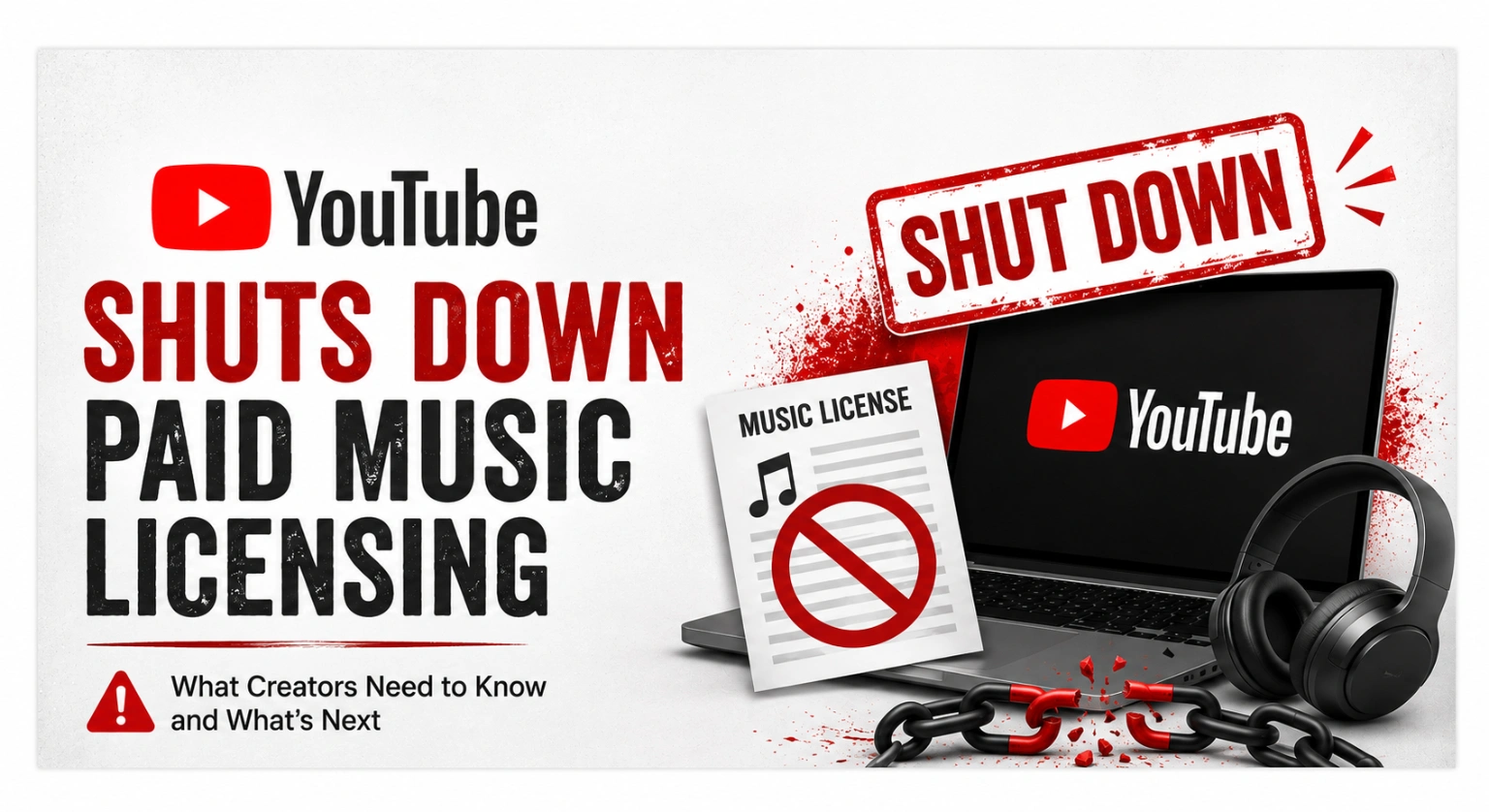
Buying a music licence used to be the simplest way for creators to use a song without losing revenue. YouTube has stated that paid Creator Music licenses will be phased out starting August 10, 2026, as the catalogue moves toward no-cost licensing and revenue-sharing tracks. YouTube confirmed in its Creator Music help documentation that paid licences are being phased out in favour of free and revenue-sharing tracks only.
What Is Changing With Creator Music
Creator Music has offered two ways to use a track in a monetised video. Creators could either pay an upfront fee to use music in a monetised video and keep the same revenue share that applies to videos without music.
The August 10 Deadline Explained
The change is not open-ended. After that date, creators uploading new videos will only have free and revenue-share options to choose from, not paid ones.
Once paid licenses are deprecated on August 10, only free license strategies can be set, and any track a creator wants to offer for free licensing has to be opted in manually.
What Happens To Existing Licenses
Creators who already bought a license do not need to panic. YouTube says paid licenses already attached to a video will remain valid until the end of their agreed term.
There is no renewal path once that term ends, though. All free and paid licenses currently in use stay in effect until their term expires, with no option to renew under the existing terms.
How Revenue Sharing Works Instead
With paid licenses phased out, revenue sharing becomes the default way to use a fully protected track without an upfront cost. If a track is licensable but a creator doesn’t want to pay for it, revenue can be shared by using the track for under 30 seconds in a video that runs three minutes or longer.
Why Creators Should Act Now
The transition creates two practical tasks rather than one. Creators need to confirm that any licence bought before the August 10 cutoff has actually been applied to the intended video.


Unused purchased licences are expected to be refunded under the transition rules. Channels sitting on older Creator Music guides should treat that content with caution too, since it may already describe a purchasing model that no longer exists.