
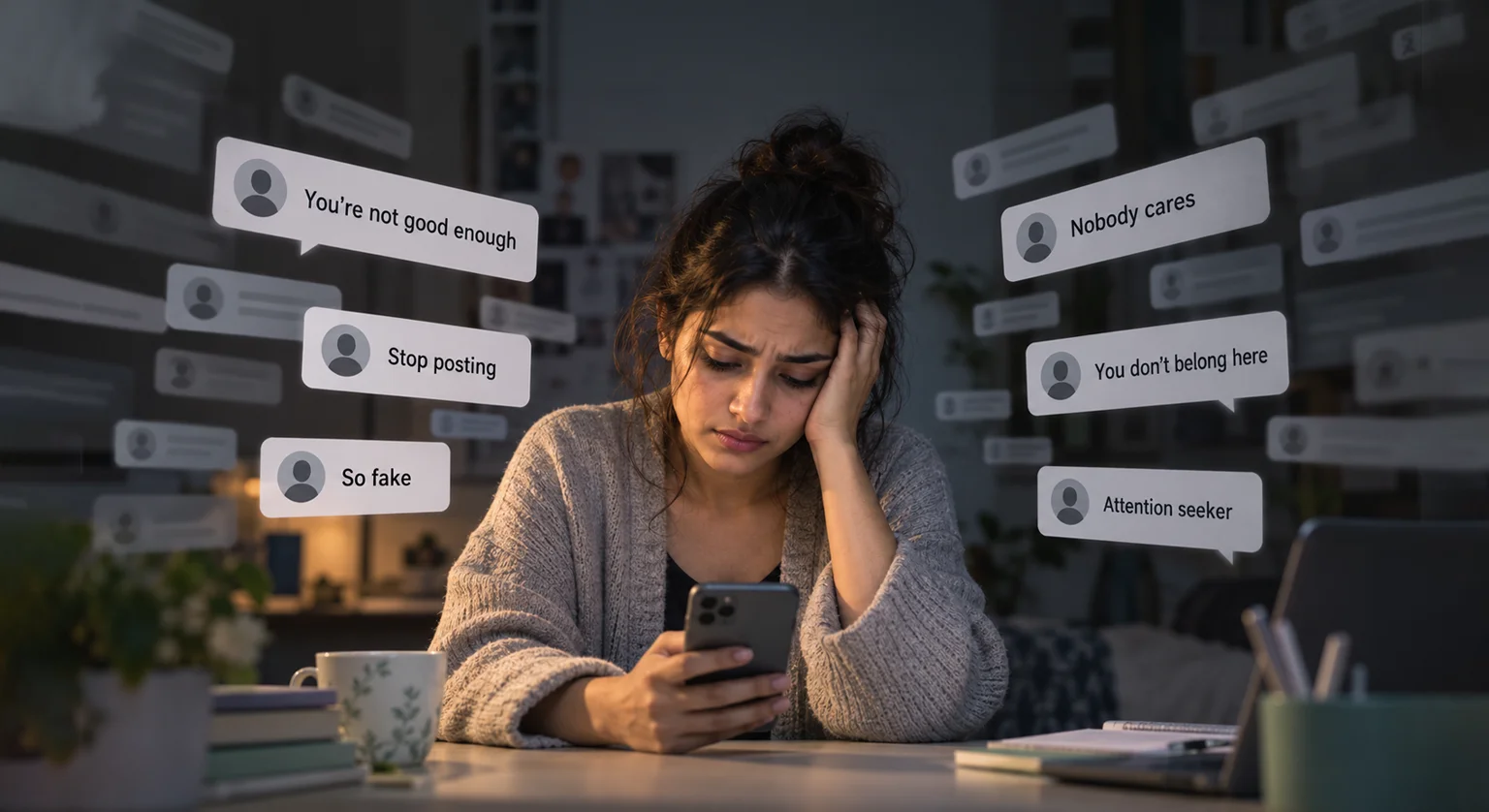
When Aanya Wig spoke about women’s safety after participating in the CJP protests in Delhi, clips of her interviews and protest slogans began circulating online. Then came the abuse.
Wig, the founder of Her Haq, a gender-equality organisation, said she received more than 10,000 lewd comments, r*** threats and sexually abusive messages. The harassment moved beyond public posts into direct messages and threatening voice notes.
She restricted her accounts, filed a police complaint, consulted a lawyer and contacted the National Commission for Women. She also escalated the issue to Meta’s public policy team in India. Yet she said many of the comments remained visible, and some of the accounts she reported were not removed.
For at least a week, she was afraid to leave her home. “I began questioning whether I wanted to continue creating content,” she told TCI.
For women who earn a living by speaking publicly, the consequences of online abuse can extend well beyond a hostile comment section. Their visibility can bring audiences, professional opportunities and influence. It can also expose them to sexual humiliation, threats and attacks on their appearance; abuse that can make the work of maintaining a public presence feel unsafe.
Artificial intelligence has added another dimension. Photographs can now be manipulated or used to generate sexually explicit imagery without a person’s consent, allowing abuse to follow women even when they have not posted anything provocative or controversial.
In October 2026, Maharashtra Cyber said it had taken cognisance of a complaint filed by entertainment influencer Sania Mistry over the circulation of obscene deepfake and morphed images. According to the department’s public statement, it issued a certificate confirming the images were digitally manipulated, took down objectionable links, and initiated action against those responsible.
The cases are different, but they point to a common problem: women can be made to bear the consequences of their visibility while the people and systems responsible for the abuse remain difficult to hold accountable.
More Read
When the attack becomes personal
For DevRupa Rakshit, an independent journalist and content creator who discusses politics, feminism and gender equality, abuse has become a recurring response to her work. She said her Instagram comments have been filled with sexualised insults and that she has received r*** and death threats.
“I shouldn’t have to choose between speaking about things that matter to me, protecting my mental health, and maintaining my livelihood,” she told TCI.
The dilemma is familiar to creators whose work depends on consistency. They are expected to publish regularly, respond to audiences and cultivate a recognisable public identity. But the same visibility that helps them build a following can expose them to harassment, which they must then document, report, and manage themselves.
For Shivangi Prabhudesai, who runs the Instagram page Her Hot Takes, the abuse began when her audience was still relatively small.
She makes videos about feminism, pop culture and social norms. One examined a familiar Bollywood convention: male protagonists can win over conventionally attractive women without changing themselves, while female characters are often expected to transform their appearance to become desirable. She said the response often targeted her face and body rather than her argument. Even after she lost weight, the nature of the attacks did not change.
“Men are generally attacked for their content. And for women, it goes beyond the content,” she said in a statement to TCI.
Prabhudesai said she had reported abusive comments to Meta but often received responses indicating that no action was necessary. She has not considered quitting, though the volume of abuse can be exhausting.
Distinguishing criticism from harassment matters. Public figures should expect their views to be challenged. But a disagreement over an argument is different from sexual degradation, repeated attacks on someone’s appearance or threats of violence directed at the person who expressed it.
For women creators, attacks can turn the body itself into a target, regardless of their work’s subject.
Janani S, who creates content about pop culture and Bollywood, told TCI that she had received body-shaming comments, misogynistic slurs and insults questioning whether anyone would want to date or sleep with her. Sometimes, she said, the remarks stayed with her long after she had stopped reading them.
She has taken breaks when social media became overwhelming and relied on family and friends outside the creator economy to maintain perspective.
Rakshit, too, said the abuse could become particularly difficult when she was already struggling with her mental health. Some days, she withdrew from social media altogether. Although she has considered quitting, she continues because she wants to change the conversation.
The contradiction is built into the online attention economy. Platforms reward regular posting and engagement, but harassment can make both increasingly difficult to sustain.
A problem larger than the comment section
Research suggests these creators’ experiences fit a broader pattern, though findings about women journalists and public figures don’t automatically apply to all content creators.
A 2023 study published in PLOS ONE analysed approximately 30 million tweets posted in India between 2018 and 2021. Researchers identified misogynistic content that included sexual objectification, sexist abuse, threats of physical or sexual violence and attempts to dismiss feminist efforts. They found that both the volume and proportion of misogynistic tweets increased after the onset of the Covid-19 pandemic compared with earlier trends.
A separate 2023 study of Indian Instagram creators examined gendered online harassment and its effects on creators’ mental health.
The consequences can also change what women are willing to say publicly. In May 2026, UNESCO, UN Women and the International Centre for Journalists reported that 45 per cent of surveyed women journalists and media workers had self-censored on social media because of online violence. A quarter reported having been diagnosed with or treated for anxiety or depression linked to the abuse. The findings concern journalists and media workers, not creators as a whole, but they show how online violence can narrow participation in public discourse.
Official figures offer another measure of the problem, though they do not capture its full scale. Government data recorded 76,657 cybercrime incidents against women in 2025, up from 48,335 in 2024, according to a report by Hindustan Times. The figures cover multiple types of offenses, from stalking to doxxing to sexually abusive content.
The actual scale of abuse is difficult to establish. Stigma, fear of victim-blaming or retaliation, limited awareness of reporting channels and doubts about whether authorities will act can discourage people from filing complaints. A March 2026 parliamentary committee report highlighted gaps in how cybercrimes against women are reported and investigated.
For creators, reporting is often only the beginning. Creators may need to file a complaint with the platform, escalate it to a public policy team, and separately take it to the police or another authority. Meanwhile, the content can keep circulating.
When identity becomes the target
For queer creators, harassment can extend beyond their opinions and appearance to their identity.
Hiten Noonwal, a design educator, content creator and drag artist, documents androgynous styling, costumes and performance on social media. His posts have drawn comments questioning his masculinity, homophobic slurs and death threats.
“Makeup and costume-related posts frequently attract hostility, particularly videos in which I remove my drag accessories,” he told TCI.
For around four years, Noonwal has turned hateful comments into material for self-portraits and creative projects. “I convert that hate into art,” he said. The abuse still hurts, he said, and he has become more cautious about posting certain images, fearing Instagram might remove his content or restrict his profile. He wants platforms to review reports more carefully, with human review when automated moderation fails.
In October 2026, Madhusudan “Mad Sandhu”, a Punjabi LGBTQ+ influencer and makeup artist who had faced homophobic trolling, was shot dead in Amritsar. The Indian Express reported that police were investigating the killing and had not established a motive.
Who is responsible for keeping creators safe?
The creators interviewed for this story described a recurring frustration: the burden of responding to abuse falls largely on the people targeted by it.
They must save screenshots, identify accounts, submit reports, follow up with platforms and decide whether to involve the police. They may also need to restrict comments or direct messages, even when those tools limit their ability to engage with followers and build their businesses.
For creators who depend on brand partnerships, the professional consequences can be less visible than the abuse itself. Janani said she had not knowingly lost brand deals because of harassment, but believed some brands treated abusive engagement as useful visibility rather than a problem requiring intervention.
Noonwal believes talent managers and agencies should offer practical guidance when creators are targeted. He argues that those who earn money from a creator’s reach should not leave that person entirely alone when the attention turns hostile.
Formal routes exist for seeking help. The National Cyber Crime Reporting Portal accepts cybercrime complaints, and victims can approach local police or cybercrime units. The National Commission for Women has also taken up individual cases involving online abuse. In July 2024, for example, it took cognisance of alleged obscene remarks posted about the widow of Captain Anshuman Singh, after which Delhi Police registered a first information report.
These mechanisms matter, but their existence does not guarantee a swift response. Wig’s account illustrates the strain of navigating multiple systems while the abuse continues.
In one case described by a creator, a man repeatedly left abusive comments. She contacted his employer through LinkedIn, and the company asked him to apologise. He did, but the harassment resumed.
The episode shows the limits of informal interventions. An apology or a workplace reprimand may not prevent further abuse. Publicly identifying a harasser or contacting an employer can also expose a creator to retaliation, which is why evidence-based complaints and careful documentation remain important.
What more can be done
The creators interviewed want platforms to respond faster to credible reports, improve moderation of Hindi and regional-language abuse, address repeat offenders, and explain more clearly why certain posts or accounts are restricted. They also want brands and talent managers to take substantiated complaints seriously rather than treating the fallout as an individual problem.
Comment filters and restricted messages can provide some protection, but they may also reduce the very engagement that helps creators sustain their work. Making an account private can limit exposure, but it can also make it harder to reach new audiences.
For women and queer creators, leaving social media may mean surrendering a space to work, find community, and express themselves.
Rakshit does not believe the answer is for women to become more tolerant of abuse. She wants to continue creating, but argues that platforms must stop treating safety as an individual responsibility.
The creator economy depends on people being willing to share their opinions, identities and experiences in public. When harassment makes that participation harder, the consequences extend beyond any one account: audiences lose perspectives, conversations narrow, and the promise of an open digital public sphere becomes harder to sustain.
The National Commission for Women was contacted for comment but did not respond at the time of publication.