
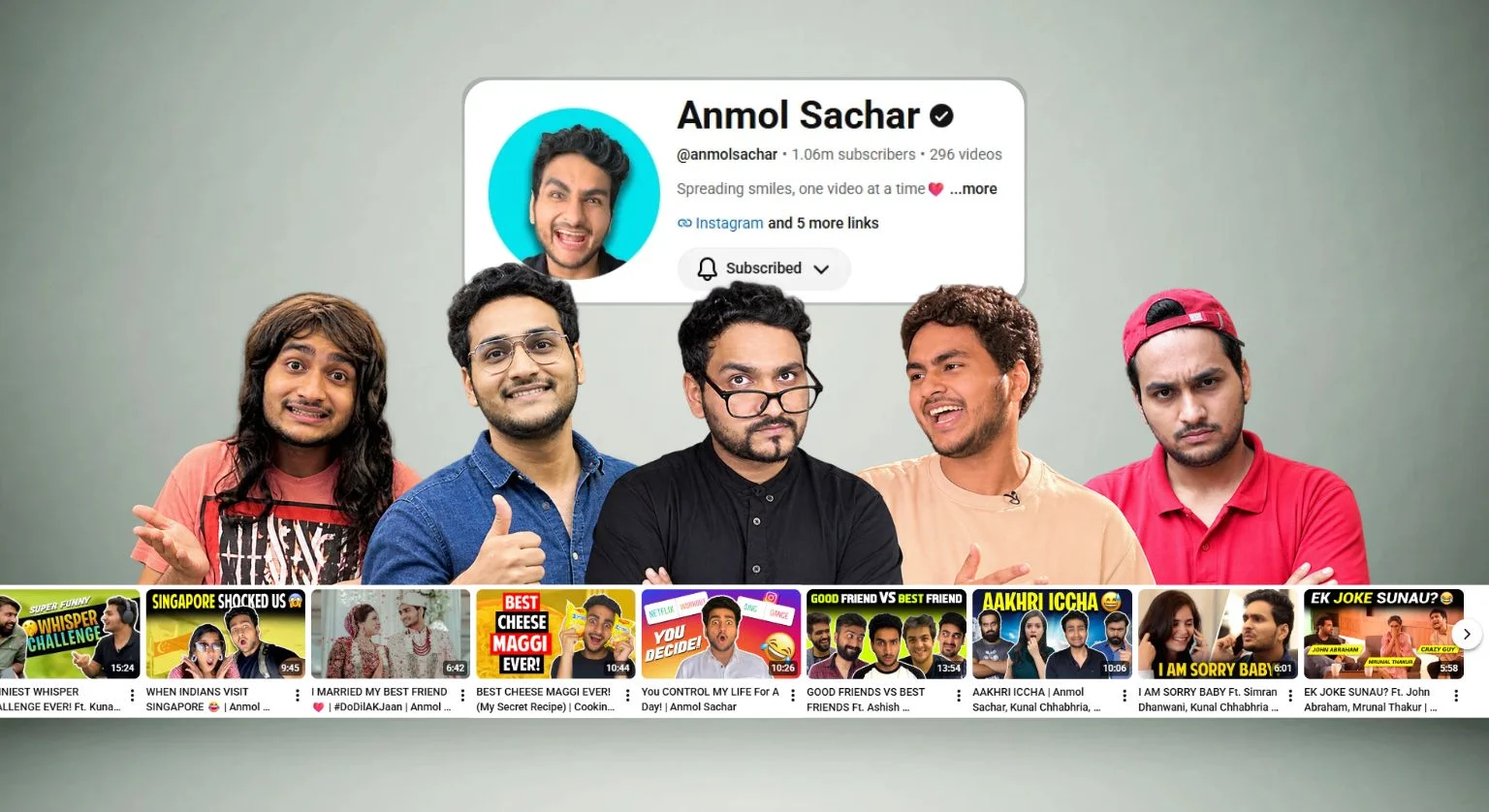
For Anmol Sachar, YouTube wasn’t the original plan, he wanted to be a filmmaker but struggled to find work as an assistant director. He eventually secured a clapper’s role in the feature film Dishoom and remembers celebrating the opportunity – only to find out he had been replaced.
- How did you go from wanting to work in films to creating content?
- If you were starting in 2026 instead of 2016, what would you do differently?
- How has your content changed as your audience has changed?
- How do you handle it when a video you believe in doesn’t do well?
- Why did you stop collaborating with Ashish Chanchlani and focus on your own content?
- Why are you posting fewer long-form YouTube videos?
- What were your first brand collaborations on YouTube and Instagram?
- How do you decide what to charge?
- Have you turned down well-paid deals that weren’t right for your audience?
- Is content creation your main source of income, or are you exploring other revenue streams?
- Do you still want to pursue filmmaking or acting?
- When should a creator sign with an agency, and how can it help?
As for YouTube, making his own videos meant he could write, direct and act without waiting for someone to hire him. There was a personal reason for choosing comedy, too: other creators’ sketches had given him moments of relief during his mental-health struggles. He wanted his own videos to offer that feeling to others.
He was already creating independently when Ashish Chanchlani’s team discovered his work. One shoot led to more collaborations. Alongside making videos, Sachar was learning how to earn from them: the excitement of an early brand cheque, figuring out what to charge, and realising he had signed with an agency too soon.
In a conversation with TCI, Sachar looks back on his journey from filmmaking ambitions to a career on YouTube, discussing his early earnings, career growth and the realities of making content for a living.
How did you go from wanting to work in films to creating content?
Anmol: I wanted to be a filmmaker. After graduating in mass media, I struggled to find work as an assistant director. I finally landed a clapper’s role on Dishoom, then found out I had been replaced.
Around 2015–16, the internet was booming. I loved The Viral Fever and AIB. Content creation let me write, direct and act in my own videos, which was very close to filmmaking.
Comedy was also personal. During my 12- to 13-year battle with clinical anxiety, depression and OCD, YouTube sketches gave me a few minutes of peace. That peace was priceless for me. When I started getting better, I wanted to do that for others: spreading smiles one video at a time.
I still have bad days. I keep sharing my mental-health journey because even if it helps one person feel better, my mission is accomplished.
If you were starting in 2026 instead of 2016, what would you do differently?
Anmol: I wouldn’t change too much, except I’d focus much more on hooks and the first five seconds. Back then, I didn’t have to hyper-engineer everything to retain attention. Apart from that, all the mistakes and stumbles taught me something. They played an important part in making me who I am.
How has your content changed as your audience has changed?
Anmol: I’ve had to adapt. It’s not that viewers have stopped watching long-form content, but they’ve stopped giving content unlimited time to become interesting.
It doesn’t matter how good a video gets after 30 seconds if people never reach that point. I try to give as much value or entertainment as I can at the start.
How do you handle it when a video you believe in doesn’t do well?
Anmol: Even today, after more than a decade, it does feel bad. I’ve spent hours on videos that tanked, while videos I barely put effort into have gone viral.
There is really way too much unpredictability when it comes to success on social media. It’s easier to move on now because I’ve been through that cycle so many times.
Why did you stop collaborating with Ashish Chanchlani and focus on your own content?
Anmol: I was already making content when Ashish and the team discovered my work. People think we were childhood friends, but we met through work. One shoot led to another, and we made about 15 to 20 videos over two to two-and-a-half years. I have very good memories of that.
COVID was the turning point. Travelling from Andheri to Ulhasnagar took two-and-a-half to three hours, and the restrictions made it almost impossible. The gap grew, and by then I was focusing on my own journey again. It was working out well.
Why are you posting fewer long-form YouTube videos?
Anmol: It’s not that I fell out of love with YouTube. Long-form got me in front of audiences, so YouTube will always be special to me.
I’ve become more selective about what deserves a long-form video. If a long-form video takes me a month, I could make seven or eight short-form pieces in that time and connect with my audience that many times.
But there’s no replacement for the connection long-form builds. When people meet me, they remember specific videos, sometimes one where I was simply talking about my weight-loss journey. Short-form has taken the front seat over the past few years, but that is going to change again.
What were your first brand collaborations on YouTube and Instagram?
Anmol: My first paid collaboration was on YouTube, for Cambly. That was when I realised content could bring in money and eventually become a career.
My first branded work on Instagram was for Sony Music, making funny dubs and mashups with their songs. I remember the cheque being around ₹8,000–₹10,000 for seven or eight videos. Real money hitting your bank account for something that’s your passion – nothing can match that.
Back then, brands and creators were both figuring things out. Earlier, brands bought reach; now they’re buying trust. It’s about the person delivering the message and whether the audience acts on what they say.
How do you decide what to charge?
Anmol: Follower count is only one factor. Doing this for a long time gives me experience, not automatic relevance or a licence to charge whatever I want.
Then there are likes, shares and the quality of comments. Are people just leaving emojis, or actually discussing something?
Many newer creators don’t realise you should be charging separately for usage rights. When a brand runs ads with your content, not charging for that leaves money on the table.
Exclusivity adds to the bill too. If I can’t work with competitors for three months, I’m losing potential business. And if a brand needs a video tomorrow and I can deliver, that can command a premium.
Have you turned down well-paid deals that weren’t right for your audience?
Anmol: Yes. A tobacco brand was willing to pay more than twice my usual fee. I just couldn’t get myself to do it. As your community grows, what you say has a much bigger ripple effect.
A brand is going to pay me maybe once, maybe twice. My audience has to trust me for the next 100 or 200 times. If I promote something I don’t believe in just for money, that trust isn’t going to come back. It’s worth more than the fee.
But I’m in a better position to say no today. If I were a smaller creator getting one deal in three months, I don’t know what I would have done. I don’t want to judge anyone else; everyone has their own reasons.
Is content creation your main source of income, or are you exploring other revenue streams?
Anmol: Content creation is my primary source of income, but I’ve also explored consulting with smaller start-ups. Creators have hands-on experience of what works on social media. Brands can hire us for consultations or retainers to review their strategy and suggest what could be done differently. I’m planning to pursue that more actively.
Do you still want to pursue filmmaking or acting?
Anmol: I would never say never. I’ve done a lot of over-the-top comedy, but I’d love to play a serious character or do a show with meaning and depth. I know I can deliver that.
I’m not actively auditioning or pursuing it right now. But acting, directing or writing for OTT or films is definitely something I want to do.
When should a creator sign with an agency, and how can it help?
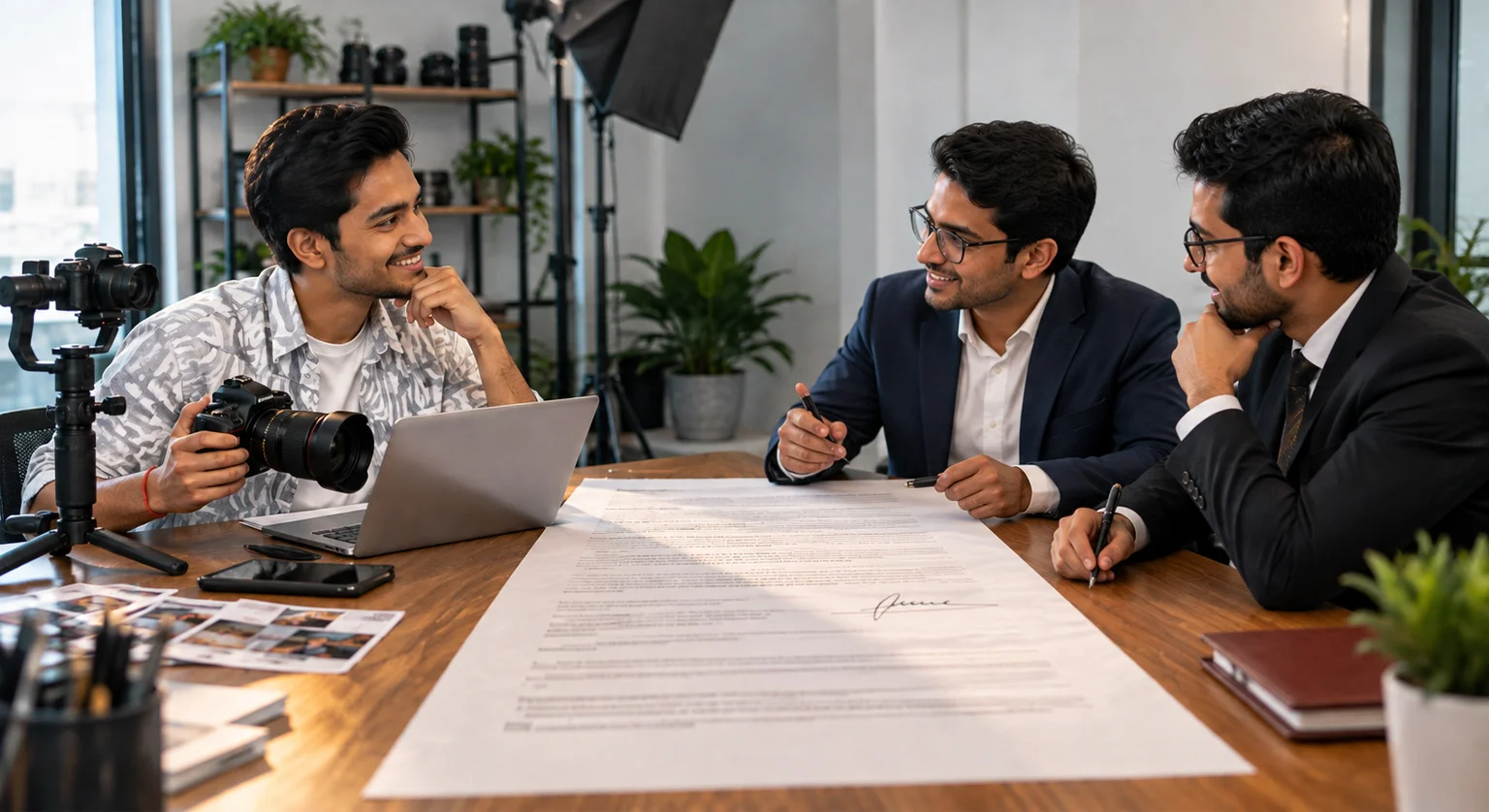
Anmol: I made the mistake of signing with an agency before I even had 7,000–8,000 followers. My advice to newer creators is: first grow to around 30,000–50,000 followers and try to crack two or three brand deals yourself.
Handle the negotiations from start to finish. Without that experience, it’s easier for an agency to take you for a ride, and harder to understand where the brand and agency are coming from.
After my first contract expired, my wife, Kriti, managed my business for three to four years. An agency can help at the next stage by pitching you for campaign briefs coming in for other creators on its roster.
So don’t sign too early. It’s easy to be tempted by everything an agency offers, but it may not be the right time.