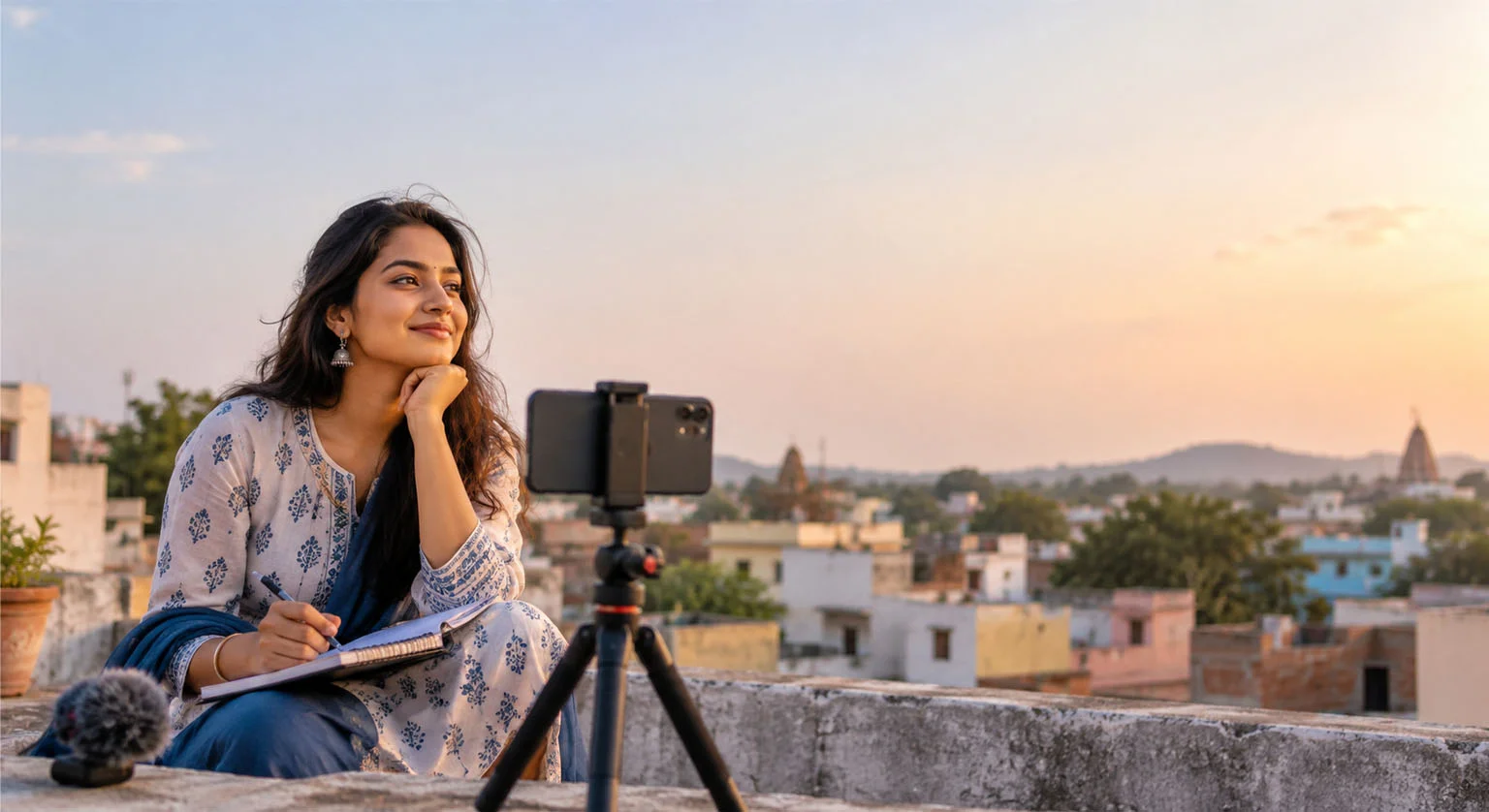

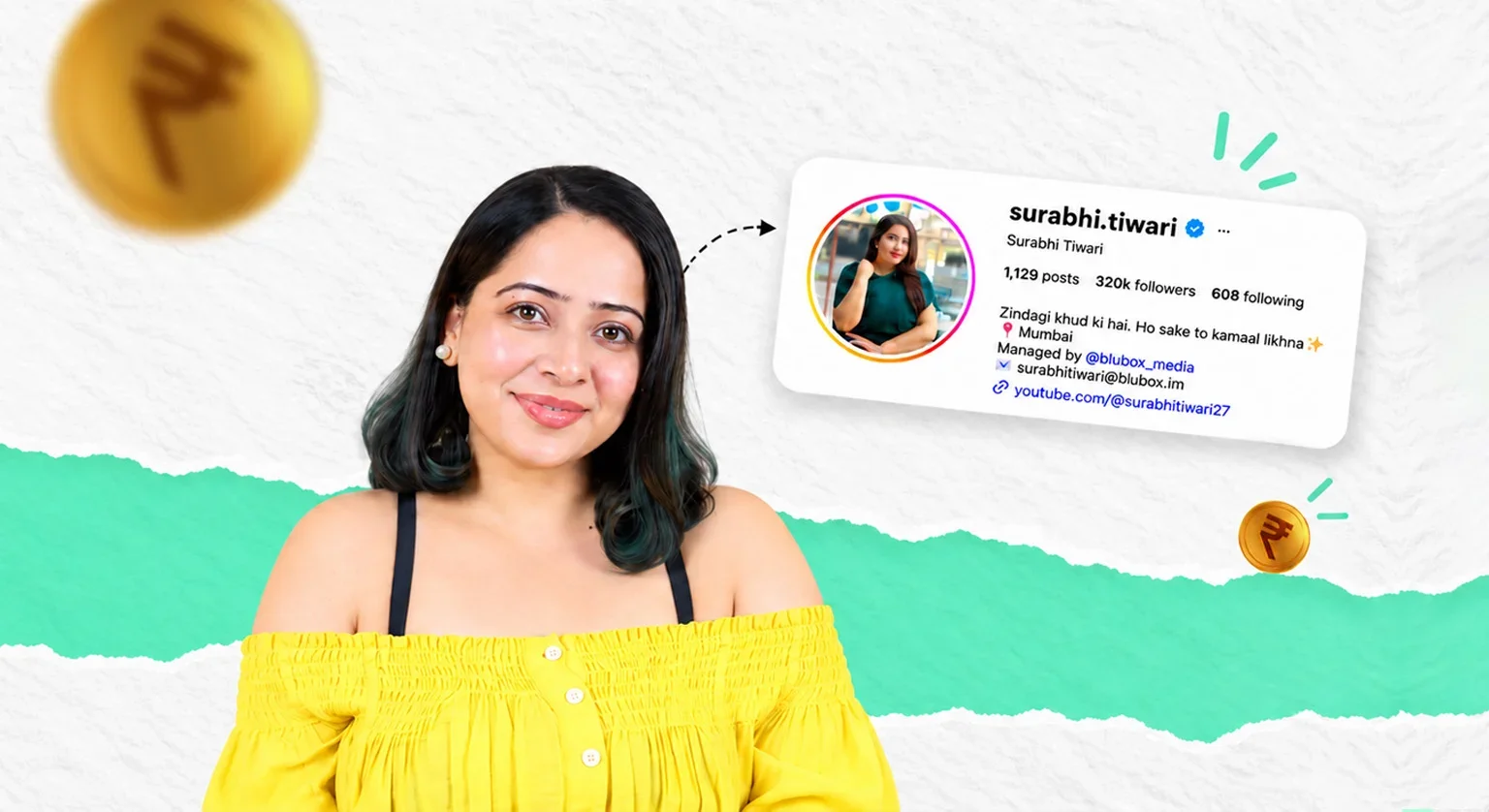
For Surabhi Tiwari, when her content eventually began earning her more than her software job had, pursuing it full-time started to make sense. She had begun creating alongside her job at Infosys, building an Instagram following of around 40,000 before paid collaborations came along. Now, she could pay her bills, put money aside and have something she had wanted from her working life: the freedom to decide what she made and how she worked.
- You left Infosys, then walked away from acting. What did content creation give you that neither career could?
- “Do it for the passion; the money will follow” is familiar advice to creators. Why doesn’t that argument convince you?
- How did your brand work grow from barter to hundreds of collaborations?
- Did you choose beauty and skincare, or did the first brands willing to pay you end up shaping your niche?
- When a creator says they charge lakhs for a reel, how much does that tell us about what they actually earn?
- What is the difference between working with a large brand than a smaller D2C company?
- What happens when a sponsored post doesn’t immediately bring in sales for brands?
- Your main account is built on professional shoots. Why start a separate fitness page, and are brands willing to pay for the more casual content?
- You’ve also started a couples page. What goes on it, and is paid work coming through?
Close to a decade into creating, Tiwari has worked on hundreds of brand collaborations, with beauty and skincare becoming the centre of her work.
TCI spoke to Tiwari about what happened between building an audience and building a livelihood. The conversation covered how the first paying brands helped shape her niche, why she questions the earnings figures creators share online, and what experience has taught her about working with brands and managers.
You left Infosys, then walked away from acting. What did content creation give you that neither career could?
I was working at Infosys in Pune, and by 2017 I knew I wasn’t liking my job. I had already started posting on Instagram and had around 30,000–40,000 followers, but I wasn’t getting collaborations then.
I left and moved to Mumbai to pursue acting. I did television shows, music videos and Telugu films. But I was still working according to someone else where the script was theirs, the dialogues were theirs, and you had to keep doing it until they were satisfied. There was no creative freedom.
By 2019, people had started offering me money for content. I had close to 100,000 followers before lockdown. We weren’t getting lakhs for a video; it was ₹5,000, ₹7,000, ₹8,000. But I realised this could be a career.
Eventually, I left acting completely. If I wanted to work at 1 am, I could. If I wanted a day off, I could take one. I wanted to live on my own terms, and this profession allowed me to do that.
“Do it for the passion; the money will follow” is familiar advice to creators. Why doesn’t that argument convince you?
I started when there was no money in it for me. It was something I liked doing. But then it began paying more than my software development job, paying my bills, and I could save. That’s when I realised how much potential there was and that I had to make it my main work.
Money is the main driving force. If you say, “It’s my passion, money will follow,” you’re still talking about money. If I tell you money will not follow, are you going to do that for another ten years? Are you going to stick to it?
There are people who love their jobs and are very good at them. I wasn’t enjoying mine. Every individual is different.
How did your brand work grow from barter to hundreds of collaborations?
I think my first barter collaboration was in 2017 or 2018. I can’t remember the exact year. I was getting clothes worth ₹10,000–₹15,000, and Daniel Wellington sent me three watches. I was very happy getting barter then. Around 2019, Mamaearth and WOW Skin Science were among the first brands to pay me. The amounts were small initially.
During lockdown, I made a list. By September 2020, I had done around 400, including barter and paid work. I’ve done more since, and many brands have repeated.
I’ve worked with Garnier, Maybelline, Lakmé, Neutrogena, Myntra, Flipkart and Amazon. When someone has been in the industry for seven or eight years, that number of collaborations is possible.
Did you choose beauty and skincare, or did the first brands willing to pay you end up shaping your niche?
Initially, it wasn’t. Those were the brands that started paying me. I was already creating content, they approached me, and then more skincare brands started coming.
After the lockdown, I realised I was earning well from it. In my experience, fashion brands often paid less than beauty, unless it was a very big fashion brand.
Beauty awareness has grown so much. People know about products and ingredients they weren’t talking about a few years earlier. Even though there are so many creators in the category, it has paid well for me.
When a creator says they charge lakhs for a reel, how much does that tell us about what they actually earn?
I also have an influencer marketing agency, so I see it from both sides. There are so many videos saying, “I made this much,” or, “I closed a deal for this much.” Newer creators see that and start quoting an amount because somebody else said it.
Having 100,000 followers doesn’t mean you get ₹1 lakh. A lot of brands work on cost per view. Engagement, content quality and your experience also matter. You need to be aware of your own profile and capabilities.
There is a difference between charging and actually getting paid. I can say I charge ₹1 crore for a reel, but am I getting ₹1 crore for a reel? Good content takes money, effort, time and energy. You can’t decide your rate only from something somebody posted.
What is the difference between working with a large brand than a smaller D2C company?
With bigger brands, agencies usually handle the work. They have everything very clear.
I did an event for L’Oréal where the budget was very good. Your clothes, hairstyle, makeup, the shots they needed, the text, everything was decided. They wanted a subtle, natural look. You knew what was expected, and the budget made you happy to do the work.
With smaller brands, sometimes they aren’t sure. I did a UGC video through my fitness account where the script and outfit had been approved. After the video was made, they said they loved it, even their director loved it. Then there was a small change: could I say this instead of that?
So it’s about preparation as well as revisions. The bigger brand has hired an agency that does this every day. When there isn’t clarity at the beginning, decisions change later.
What happens when a sponsored post doesn’t immediately bring in sales for brands?
Putting money into influencer marketing doesn’t mean your sales will immediately increase. They might, but people first need to know you exist. My stories get around 8,000–10,000 views. If I post about a new brand, people find out about it. Some might Google the name or look at its Instagram. The next time they see it, they might think, let’s try this.
First, we need to know you exist. Then we need to know you’re good. Then we might want to know someone else who uses your product before we use it ourselves. Something has to push that sale.
Your main account is built on professional shoots. Why start a separate fitness page, and are brands willing to pay for the more casual content?
For the past four or five years, I’ve mostly posted professionally shot content on my main account. I wanted somewhere I could post casually, on my phone, at home, without thinking so much about it.
I started the fitness page last year. Initially, videos were getting around 5,000–7,000 views. Within roughly six months, a brand came in and then kept returning every month for UGC videos.
The page is paying, but not very much. It’s casual and impromptu. I’ve only collaborated with my main account once, for a static photograph I liked. Otherwise, it’s growing organically, with a different audience. Some people follow all my pages, but I haven’t kept pushing it through the main one.
You’ve also started a couples page. What goes on it, and is paid work coming through?
We started after we got married. There are things other couples do on camera that we aren’t comfortable with. But the banter, the fun, the everyday drama, we can do that.
I’m a very funny person off-camera. Sometimes I say something and think it could go viral, but as soon as the camera is on, we can’t do it in quite the same way. So we don’t post everything.
The couple page is backed by my main profile because those two go together. Fitness is a different genre. We’ve completed two collaborations. One was with Bluestone, initially for my main profile. When I reshared it on the couple page, we got another brand collaboration. The couple page has around 6,000–7,000 followers, and it has started paying us now. We’re getting almost twice the brand deals that I get on my fitness page. We’re very happy about that.