
Earlier, brands had to hire a creator, send out products, set up a shoot, and wait for edits. Now, they can make a promotional video with a synthetic personality in a few minutes, adapting the same ad for different audiences, languages, and platforms without a new production. Brands are drawn to AI’s speed, scalability, and creative control. But for human creators, AI raises a tough question: if brands can make content that looks like a creator’s work, will they still pay people to do it?
Conversations with AI-content companies, marketers, agencies, and human creators show that some production jobs and business deals are already shifting. Still, there isn’t clear industry-wide proof of how many human creators have lost brand deals directly because of AI influencers.
The real issue isn’t whether human creators will vanish, but which parts of their work brands think they can copy for less money.
From hiring creators to building virtual personalities
India’s influencer marketing industry has become a major advertising channel. According to Kofluence’s 2026 Annual Research Report, India’s influencer marketing industry was valued at ₹3,000–3,500 crore in 2025 and is projected to reach ₹4,500–5,000 crore by 2027, growing at a compound annual growth rate (CAGR) of 22%. In the meantime, WPP Media’s Influencing with Integrity: India Influencer Marketing Report 2025, produced with The Goat Agency and Kantar, found that 70% of brands cited trust and credibility as their top reasons for working with influencers.
AI-generated personalities offer advertisers another option, but agencies aren’t necessarily abandoning human creators. Instead, they are weighing cost and scale against the need for trust and engagement. Sini Magon, COO and global partner at Grapes Worldwide, says AI lets them save money on distribution, testing, and optimisation. Still, “human creators continue to command investment where trust, relatability and community engagement matter,” she told TCI.
However, another part of this change is brands wanting to own their own channels. Rajat Kumar, co-founder and chief business officer of Glido Labs, an AI-focused media company, says brands now want to build channels they control instead of relying only on partnerships with individual creators.
“The biggest shift in Indian influencer marketing is that brands now think about owned distribution,” Kumar told TCI. “They no longer just rent reach for each campaign. They want their own channel, audience, and content engine they can control.”
Kumar says Glido Labs’ content properties have gained over 500,000 followers and 500 million organic views. Their AI influencers create educational content to attract audiences with certain interests before bringing in brands or products. He adds that travel brand Headout asked the company to test AI influencers for a feature aimed at the FramesNFlights, Glido Labs’ AI travel-couple account, which has over 100,000 followers.


Kumar doesn’t see this as a full replacement of human creators yet. “We have not seen human creators being displaced at scale. So far, it’s affecting how brands split their budgets. We have not observed lost deals,” he says.
Some companies say clients are already assigning certain jobs exclusively to synthetic content. Prachi Vagal, marketing and brand strategies lead at Rainmakers Consults, is more cautious about calling it a replacement. She warns against seeing AI as a total replacement. “I think brands are exploring the use of AI to optimise production costs, but I wouldn’t say that it has replaced human creators.” She says the decision depends on the campaign’s goal and whether the brand needs scale or a creator who can build trust and connect with an audience.
Some brands are replacing human-led UGC entirely
Some clients have moved past just testing AI. Himanshu Poswal, founder of IndiaFutureAI, says they now use only AI-generated user-generated content (UGC), with several synthetic personas making ads for different audiences. Poswal says five clients have made this change. He told TCI that some even run 10 to 15 accounts for a single brand.
The cost difference helps explain why brands are interested. Poswal estimates an AI-generated UGC video costs about ₹200–₹500, while a similar video by a human creator costs around ₹5,000. He says an AI video takes 10–15 minutes to make, but a human-led video can take several days.
Note: These are IndiaFutureAI’s own estimates, not industry benchmarks.
Standard promotional videos are especially at risk of being replaced. If a project needs a scripted product demo or several ad versions, brands can see if synthetic content gives similar results for less money. The pressure is also showing up in fee negotiations. Kiara Powar, a sports presenter and diabetes advocate, says her team has seen brands try to lower fees by pointing to the cost savings of AI-generated content.
“My team has sometimes seen brands attempt to renegotiate fees, citing the speed and cost-effectiveness of AI-generated content,” Powar told TCI. Rather than take every partnership, her team focuses on working with brands that value personal experience and strong audience relationships.
Travel UGC creator Aditya Panwar says he has already lost several brand deals to this competition. Making a video can take him two or three days, but a synthetic version is ready in minutes. “Brands are comparing the cost of human creativity with the cost of AI production, even though both involve very different processes,” Panwar told TCI.
AI can also help with production rather than replace creators. Lalit Sharma, founder and managing director of Ethane Web Technologies, says his company uses AI for research, scripts, ad copy, subtitles, multilingual versions, and creative testing. Human teams still handle strategy, fact-checking, brand voice, and final approval.
Using AI to help with editing is different from creating a synthetic person to do a job that could have gone to a human creator. The second option directly competes for paid work.
Who bears the cost of AI adoption?
Creator fees may face the greatest pressure in repeatable promotional formats. Travel content shows the potential cost gap. Kumar estimates that producing a destination video with a human creator costs ₹60,000–₹70,000, excluding the creator’s fee. A comparable AI-generated travel-couple video, he says, costs ₹10,000–₹15,000 in generation credits.
However, production costs are not directly comparable. Sharma notes that human-led campaigns may include talent fees, usage rights, and paid promotion, while AI production also requires tools, creative direction, human review, and compliance checks. Distribution costs don’t always go down just because the ad uses a synthetic person.
These savings don’t always translate into higher creator pay. Brands might spend less, agencies could keep more profit, or they might use the budget for something other than creator fees.
For Panwar, it’s not just about losing work. He also feels pressure to do more for the same fee. Some brands have asked him to add AI-generated clips or make more videos without increasing the budget. “If a brand wants additional videos or a different production approach, the budget should reflect the work involved,” he says.
Vagal warns against linking AI directly to changes in creator rates. She thinks it’s too soon to say AI is the only reason for price changes. Instead, she sees more demand for creators who bring more than just production. “The personal touch, audience engagement and a unique perspective on the topic will always be in demand.”
“We prefer to work with partners who value our unique approach, especially in today’s AI-driven world, rather than change what makes our content special just to meet a certain price,” she says.
Kumar expects the greatest pricing pressure in generic informational content and multilingual production, where AI can generate multiple versions quickly. Creators who work in regional languages might also feel pressure if brands see localisation as just translation. But cultural references, humour, and local knowledge are more than production details; they’re often key to a creator’s appeal.
The formats most at risk are those that need frequent updates. Magon mentions product visuals, performance ads, regular social media posts, and localised creatives. Vagal adds that AI can also cut costs on product photography and affiliate creatives, but she stresses that creators remain essential for strategy and engaging audiences.
Can synthetic influencers earn the same trust?
Lower production costs do not guarantee the same audience response. According to Glido Labs, engagement hasn’t changed much between AI-hosted and human-hosted content. Kumar believes audiences care most about how useful the information is, and sometimes, having an AI host even sparks more comments.
Powar’s experience with a streaming platform is different. She saw many AI-driven creators quickly making videos and commentary. “At first, audiences were drawn to them because they could release new content so quickly. But over time, I saw users returning to human creators,” she says.
“No matter how much content is produced, it can’t replace the real connection that human creators, especially sports commentators, have with their audience,” Powar says.
Academic research also highlights differences in how consumers respond to AI and human influencers. A 2025 study published in the Journal of Product & Brand Management, titled ‘The Impact of AI Influencer Endorsements on Consumers’ Purchase Intentions, used two experiments to compare the two types of endorsers. The researchers found that AI influencers led to lower brand trust and, consequently, lower purchase intentions. This was because consumers felt AI influencers could not act independently or make their own decisions, not because they were less capable of having feelings or experiences.
These findings are particularly relevant when an advertisement implies that someone has personally used a product or recommends it based on firsthand experience. In India, the Advertising Standards Council of India (ASCI) prohibits fabricated endorsements and testimonials that falsely suggest a real person has used, experienced or recommended a product when they have not.
The issue is not only whether audiences recognise AI-generated content, but whether they trust the endorsement and understand how it was made.
What guidelines govern AI-generated endorsements?
Clear disclosure is one existing safeguard: the Advertising Standards Council of India (ASCI) requires virtual influencers to state prominently that they are not real people. Manisha Kapoor, ASCI’s CEO and secretary general, says the central concern is whether advertising misleads consumers, regardless of the technology used.
“The key consideration is whether the advertisement is truthful, substantiated and likely to mislead consumers, rather than whether AI has been used,” Kapoor told TCI.
Kapoor stresses that disclosure alone does not make a misleading claim acceptable. India’s AI advertising framework includes three key guidelines. In September 2026, ASCI released its Guidelines for Responsible Labelling of Synthetically Generated Content, effective three months after publication.
The Department of Consumer Affairs’ Endorsement Know-hows, January 2023, explicitly covers virtual influencers under the Consumer Protection Act, 2019. Meanwhile, the Information Technology (Intermediary Guidelines and Digital Media Ethics Code) Amendment Rules, 2026, notified on February 10, 2026, introduced disclosure requirements for synthetically generated content, including obligations for social media platforms to verify declarations and ensure appropriate labelling before publication.
Under the ASCI guidelines, advertisers must clearly label AI-generated influencers and brand ambassadors used in advertising. Labels such as “Audio/Video created using AI” or “Audio/Video enhanced using AI” help consumers identify AI-generated or AI-altered content and understand how it was produced.
The guidelines also ban fake endorsements, misleading product claims, and using someone’s likeness without permission, even if there’s an AI disclosure. Labels aren’t needed for lower-risk uses like basic editing or decorative AI backgrounds.
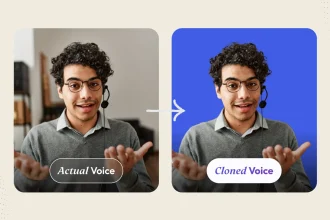
For creators, ASCI’s rules require labelling AI-generated content even when a real person’s face or voice is used with their permission. So, a creator’s licensed “AI twin” also needs a disclosure label. But labels aren’t needed for AI-assisted ad copy, subtitles, or translations. Because of these rules, creators and brands should agree on consent, payment, and how they can use a creator’s likeness and voice before starting a campaign.
Will AI create a hybrid future for influencer marketing?
Companies testing synthetic influencers have different views on how quickly AI will replace human-led work. Some production jobs are moving to AI, but other campaigns still depend on human creators.
The interviewees see different uses for the technology: Kumar sees virtual influencers as a way to build brand-owned media, Poswal emphasises lower production costs, and Sharma views AI as a way to increase output while retaining human oversight.
Some creators are also using AI to streamline their workflows without handing over creative decisions. Powar describes it as a tool, not a substitute for her judgement. “AI can make things easier or open up new creative options, but real storytelling is still at the heart of the process,” she says.
Creators who mostly make standard promotional content might feel pressure to lower their fees or change how they work. But those with special knowledge, unique stories, and loyal audiences give brands more reasons to keep working with them.
Kumar thinks hybrid campaigns that mix AI and human talent will become the norm. Whether this helps creators depends on how brands spend their budgets and if demand for human-led work keeps up with the rise in synthetic content. Magon expects hybrid models to combine AI’s speed and scale with human creators’ cultural relevance and audience trust.
The available evidence does not establish how many jobs AI has displaced in India’s creator economy. The interviews do, however, point to growing competition in UGC and performance advertising, including fee renegotiations and lost deals for UGC creators. The challenge may not be competing with AI on how many videos they can produce, but demonstrating the value of what a synthetic alternative cannot easily provide.