A hook is the opening moment of a piece of content: the first line of a video, the first visual, or the first sentence of a post. Its only job is to stop the scroll.
A hook is the first three seconds in a video; it tells the viewer why this particular video is worth their time. A weak hook opens with context the viewer does not need yet, such as an introduction or a greeting.
A strong hook opens with the one thing that matters most, like a question, a surprising fact, or a bold claim.
Why the first three seconds carry so much weight
On Facebook, videos under 15 seconds hold on to all their viewers, but that figure falls to 65% by the 15- to 30-second mark and to 44% by the one-minute mark, according to Facebook video data compiled by Cropink. On Facebook specifically, nearly half of viewers decide whether to keep watching within the first three seconds alone.
The pattern holds even on slower, more text-based platforms. On LinkedIn, a strong opening line increases average video viewership by 23%, according to platform-wide video data.
The exact rules still shift by platform, and that difference is worth knowing. YouTube‘s algorithm rewards total watch time across a video, so a hook there needs to earn minutes, not only seconds.
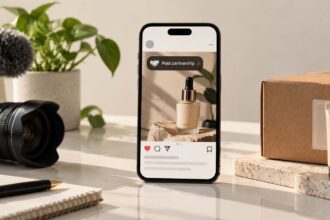
Instagram, by contrast, judges a video within its opening seconds, before a viewer has watched anything else. A flat first frame can cost a video its reach, however strong the rest of it is.
Most Reels play on mute, so a hook often has to work as on-screen text, not only as a spoken line, as Caption’s guide to video hooks points out. A hook that only works with sound on, losing a large share of its audience before anyone hears it.

An email subject line is read in a glance rather than watched for three seconds, but it runs on the same rule: give the reader a reason to open it or lose them at the first word.
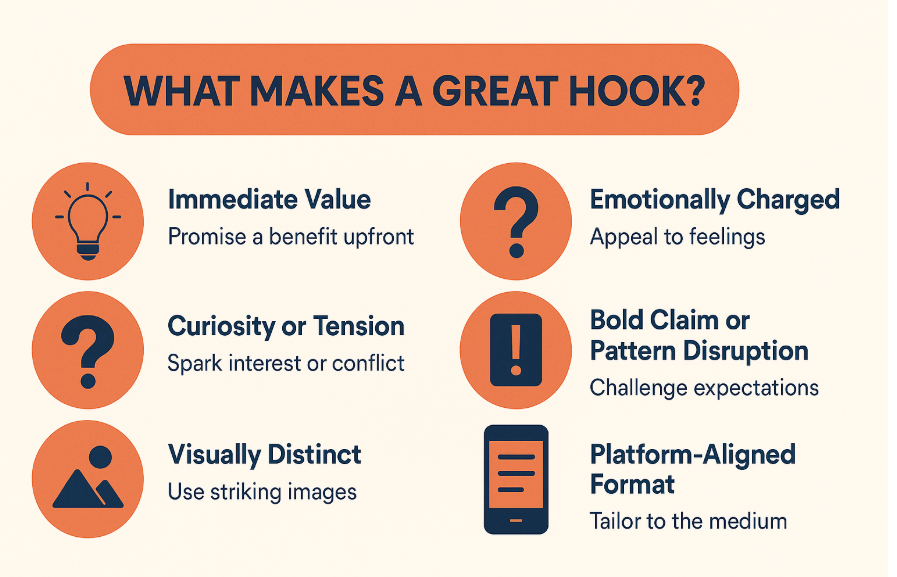
Source: bthe7
What this means for creators
For a creator, this shifts where the real editing work should happen. The middle of a video can be polished for hours, but if the hook fails, that later work never gets seen.
A creator who tries three hooks for the same video and checks which one holds attention longest learns more about their audience than weeks of guessing.
Reach is not really about the whole video, but it is about whether enough people watch the small test version the algorithm shows first.
The mistakes that kill a hook before it starts
The most common mistake is the slow build-up: a greeting, an introduction, or background before the actual point begins. Each of those seconds gives a viewer another reason to leave.
The second mistake is a vague opening line that could belong to almost any video. A good hook is specific enough that only this particular video could follow it.
The third is a mismatch between the hook and the content that follows. A hook that promises one thing and delivers another might win the first three seconds, but it loses trust and future views fast.
FAQs
Does the three-second rule apply to every platform?
Not exactly. Instagram judge videos almost immediately, while YouTube and LinkedIn also weighs a video’s full watch time, so the hook there needs to hold interest for longer.
Is a hook the same as a title?
No. A title earns the click. A hook is what keeps someone watching once the video has already started.
How long should a hook actually be?
There is no fixed length, but the opening line, frame, or sentence should say what it needs to within roughly three seconds, since that is the window most platforms measure first.
Can a hook work without sound?
Yes, and on Instagram, it usually has to. Bold on-screen text in the first frame lets a hook land even when a video plays on mute.