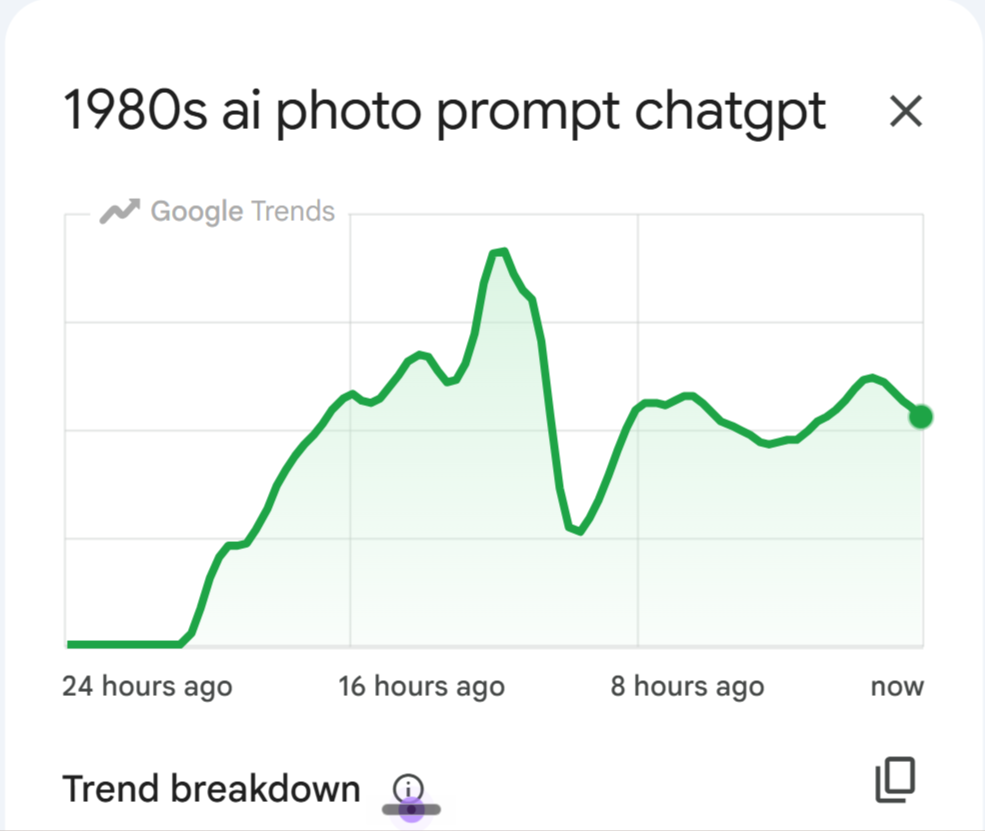
Search interest for “1980s ai photo prompt chatgpt” in India is up 1,800% against the preceding 24 hours and marked as a breakout term by Google Trends, more than 5,000% against the same time last week, with the term pulling over 200K to 500K searches in a single day.
The trend originated in Brazilian Instagram Stories around September 4, before spreading internationally, and then eventually in India, and no original creator has yet been reliably identified. What’s unusual is where the search volume is actually concentrated, and how differently people are choosing to join in.
How it works
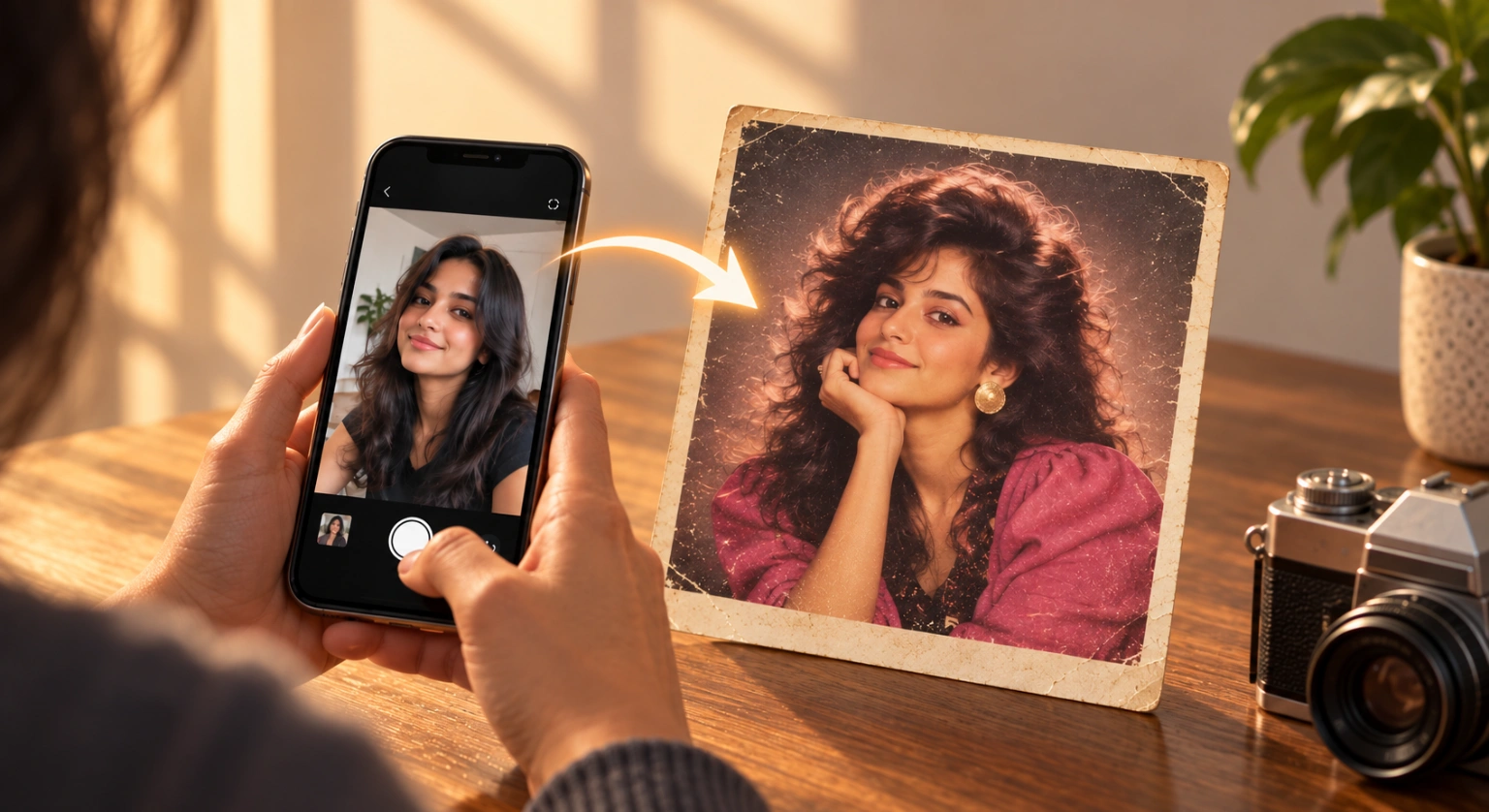
Users upload a photo to ChatGPT and tell it to keep their face untouched while rewriting everything else around it: the hair, the clothes, the lighting, the grain. Instagram’s “Add Yours” sticker is carrying the distribution on the content side. A prompt like “chat, how would I look in the ’80s” turns into a one-tap invitation for the poster’s own followers to make their own version and tag them back.
A few apps have already skipped the prompt step entirely. FaceCast generates the same look with no typing required, which is usually what happens once a trend is popular enough to be worth automating.
This has happened before, twice
It’s the same audience doing the same thing again, just with new styling: Studio Ghibli-style portraits, then AI-generated collectible figurines, and now ’80s studio photos. What actually changes each round is which company’s image model currently does the best job of keeping a face recognisable while rebuilding everything around it. Ghibli-style tools won that round back in spring; ChatGPT’s native image generation is winning this one.
Where the searches are actually coming from
This is the part the “how to” pieces already flooding search results are missing. The five states with the highest search interest for this term are Assam, Rajasthan, Bihar, Tripura and Madhya Pradesh, not Maharashtra, Delhi or Karnataka, the states that usually lead when an Instagram-native format peaks in India.
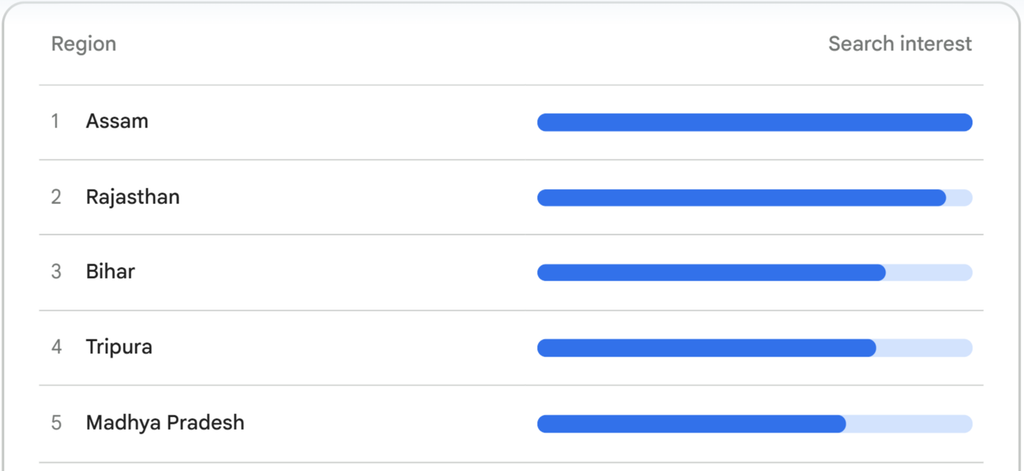
If Tripura and Assam are searching for the prompt harder than the cities that normally set India’s creator-content trends, this specific AI format reached non-metro, non-English-first India before the country’s usual trendsetters caught up to it, with a search bar doing the discovery work a feed usually does.
That’s a bigger story than the trend itself for anyone whose job is regional reach. Brands and platforms betting on India’s Tier 2 and Tier 3 markets have a live, dated example of a viral AI format that skipped the metro-first path entirely. It’s also worth someone checking whether OpenAI and Google are seeing the same non-metro skew in image-generation usage more broadly, or whether this one prompt just happened to catch on in a specific regional WhatsApp chain, because those are two very different stories.

How creators are actually splitting on this
Not everyone is joining in the same way, and the divide is its own story. One group of creators is doing exactly what you’d expect: generating the AI version and posting it as a quick trend piece, no different from how they’d treat any other feed format.
A second group is pushing back on the trend itself, arguing publicly that it’s another example of AI being reached for by default when it isn’t needed, part of a broader fatigue with AI-generated content that’s been building since the Ghibli wave.
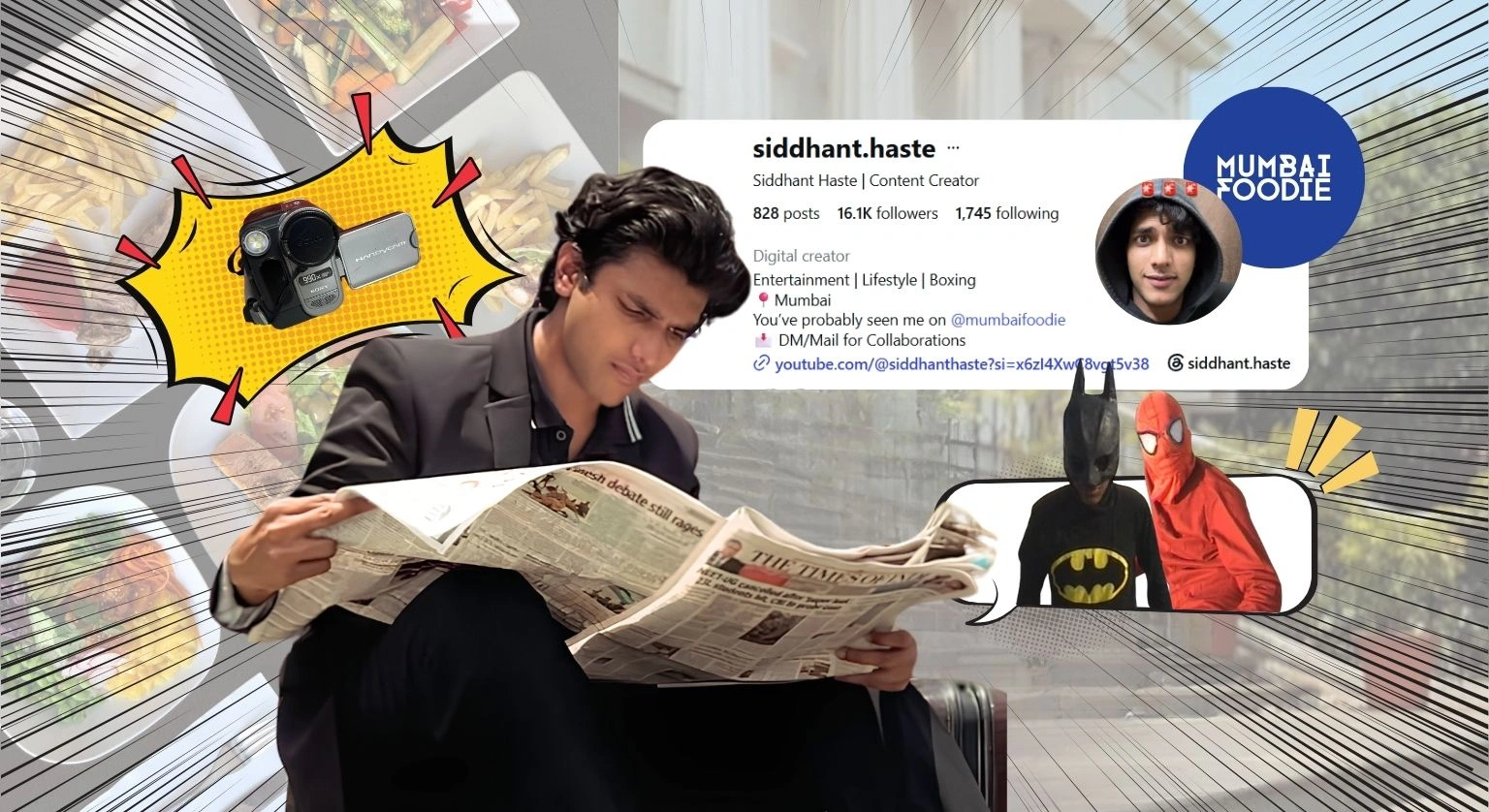
A third group is opting out of the AI step altogether and recreating the decade for real. Creator Shahnawaj Khan posted himself riding a bicycle in period styling rather than generating an image of it, a physical version of the same nostalgia trend. Others are skipping recreation entirely and posting their parents’ actual 1980s photographs instead of asking an AI model to imagine one. Both are, in effect, a quiet rejection of the premise that the fastest version of a trend is the only way to participate in it.
What it’s worth to creators and brands
For creators this costs nothing: no shoot, no editing software, a caption. The people getting real value out of it aren’t the ones posting the generic prompt, they’re the ones adding something specific to it, a couple’s version, a whole family’s version, a regional take rooted in one of the five states above, or, per the group going AI-free, no generation at all.
One detail worth flagging before anyone uploads a face: Google’s Gemini adds a visible watermark and an embedded SynthID marker to every AI image it generates. ChatGPT does neither.
Three trend cycles in, the bigger shift might not be which AI company wins each round. It’s that the states deciding whether a format catches on in India are no longer the ones anyone assumed, and a meaningful share of the audience is now opting out of the AI part altogether.