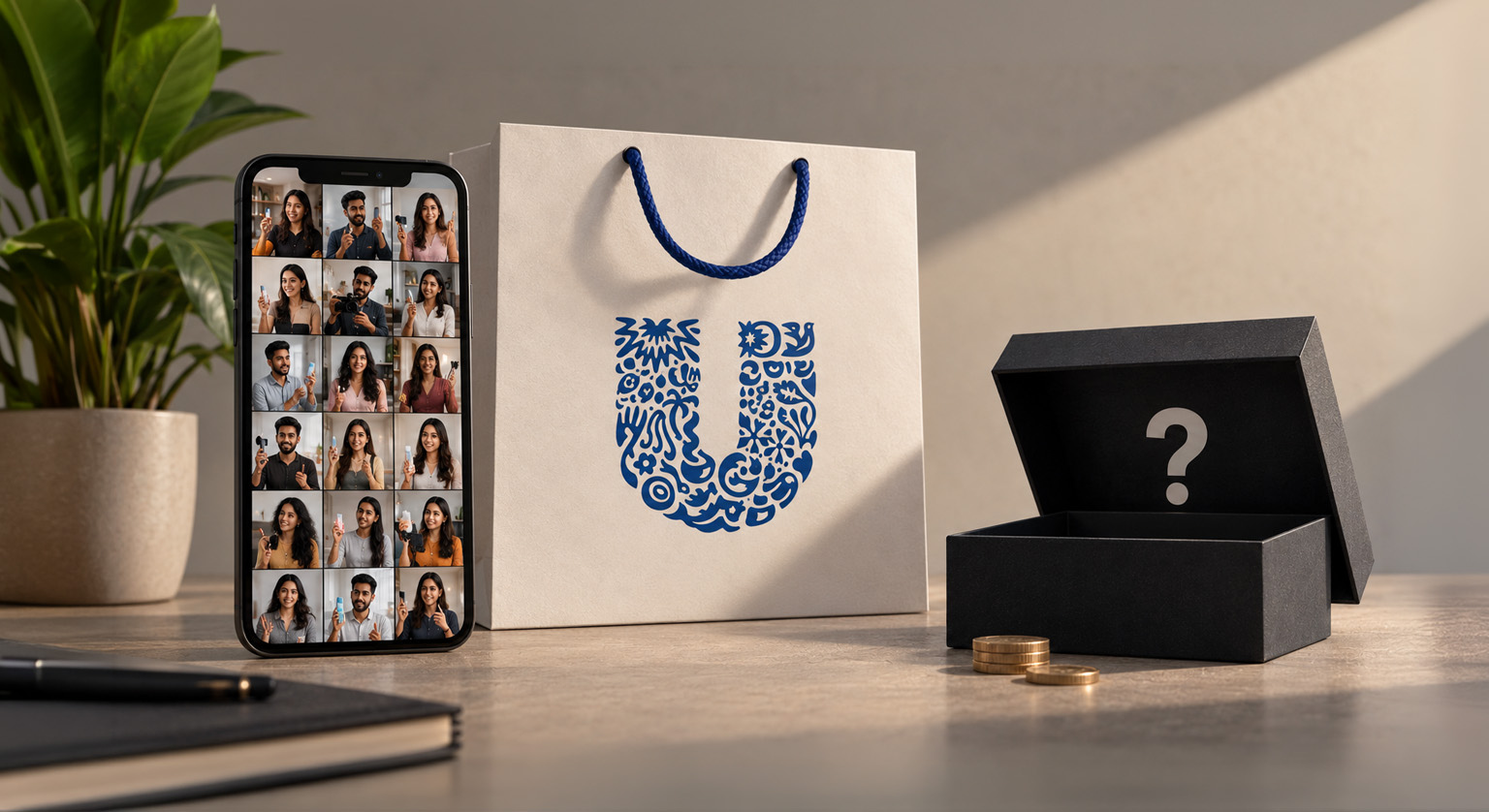
Hindustan Unilever has expanded its creator ecosystem to 30,000 as social-first campaigns, digital media and AI take a larger role in its “Winning in New India” strategy.
Hindustan Unilever (HUL) says its creator ecosystem in India now spans 30,000 people. The figure was disclosed in the company’s latest Capital Markets Day presentation, alongside AI-enabled content studios and a target to improve media effectiveness by 10%.
HUL also said more than 60% of the media budget behind its premium brands now goes to digital channels. The company is tying creator work to product launches, consumer education and category development, instead of using it only for a final burst of campaign amplification.
Creator advocacy becomes part of brand building
HUL’s SASSY framework puts creator advocacy inside its “Said by Others” pillar, alongside product science, aesthetics, sensory experience and youth appeal. In practice, creators are being brought in to introduce and explain products, rather than simply amplify a finished campaign.
The social-first model covers product launches, education and sampling. That could bring work across a wide portfolio, from established brands such as Dove and Vim to categories HUL wants to grow, including suncare, bodywash and liquid laundry products.
HUL pairs creator marketing with AI
HUL plans to use AI across content creation, real-time media optimisation and ad deployment. It says AI-enabled studios and its own consumer data will be used to speed up production and decide where ads are placed. The company has not disclosed the baseline for its 10% media-effectiveness target.
For creators, briefs may be influenced as much by audience data and campaign performance as by creative fit. HUL’s scale may generate more work, but it also gives the company a much larger pool to choose from.
The 30,000 figure needs context
HUL said last year that it collaborated with more than 12,000 influencers. It now describes the 30,000 figure as a creator “ecosystem”, but has not explained whether the two counts use the same definition.

Nor has HUL said how many creators have ongoing paid partnerships, how often they are commissioned or how the network is divided by platform, category and audience size. A larger pool could open brand work to more niche and regional creators, while increasing competition for each brief.