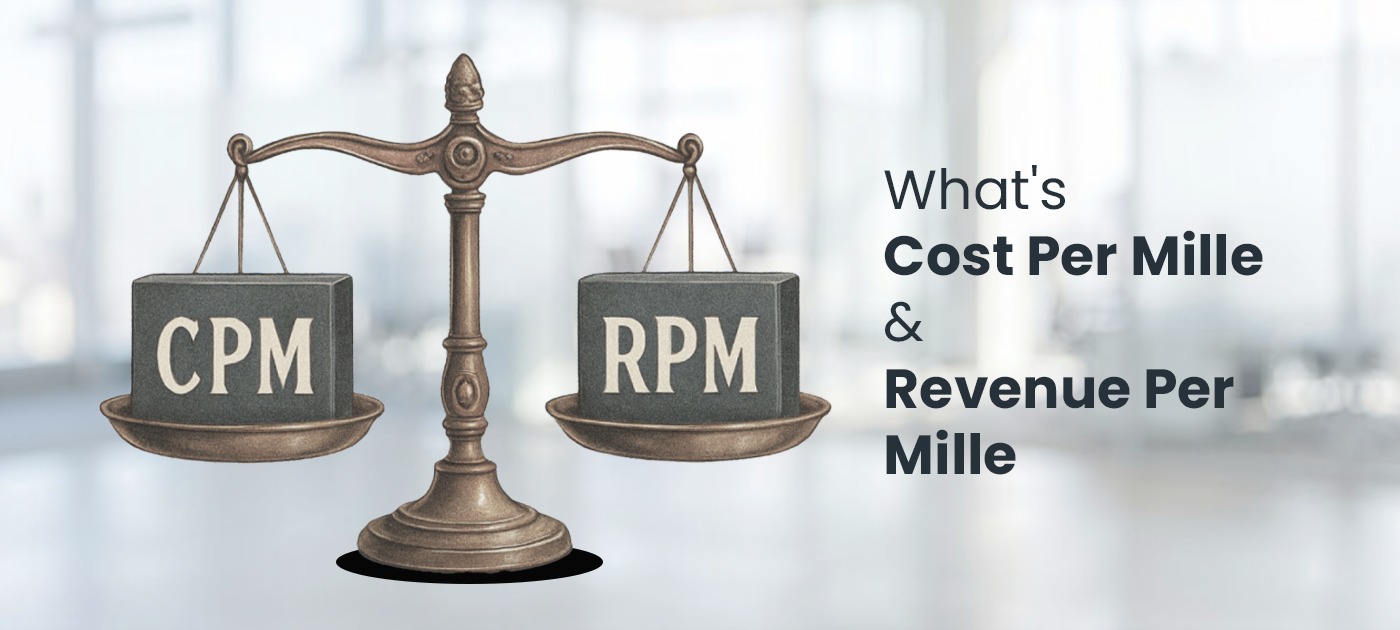
When a creator opened YouTube Studio and looked at the earnings, probably two numbers were noticed, CPM and RPM. For many creators, these metrics are confusing as one number is usually much higher than the other, making it seem like YouTube is keeping most of the money.
The truth is that CPM and RPM measure two completely different things. One shows what advertisers are paying, while the other shows what creators actually earn. Understanding the difference is important because it helps creators look beyond views and focus on building a business that generates stable income.
What is CPM on YouTube?
CPM stands for Cost Per Mille, where mille means one thousand. It is the amount advertisers pay to show ads 1,000 times on YouTube. So, if a creator sees a CPM of ₹2,000, it means advertisers are paying around ₹2,000 for every 1,000 ad impressions on that video.
The important thing to remember is that CPM is not the creator’s income. It is simply the price advertisers are willing to pay to reach a particular audience.
Different topics attract different advertising budgets. For example, videos about finance, investing, software, or business usually have higher CPMs because companies in these industries spend more on advertising. Entertainment or gaming content may have lower CPMs because advertisers often pay less to reach those audiences.
This means CPM tells creators how valuable their audience is to advertisers, but it doesn’t tell them how much money they will actually receive.
That’s where RPM comes in.
What is RPM on YouTube?
RPM stands for Revenue Per Mille, and it shows how much money a creator actually earns for every 1,000 video views. Unlike CPM, RPM includes the creator’s real earnings after YouTube’s revenue share. It also includes money from other YouTube features such as Channel Memberships, Super Chats, Super Thanks, and YouTube Premium.



In simple words, RPM is the number that matters most because it reflects the actual income coming into the creator’s account.
One of the biggest questions creators ask is why RPM is always much lower than CPM. The answer is actually quite simple.
The platform revenue share
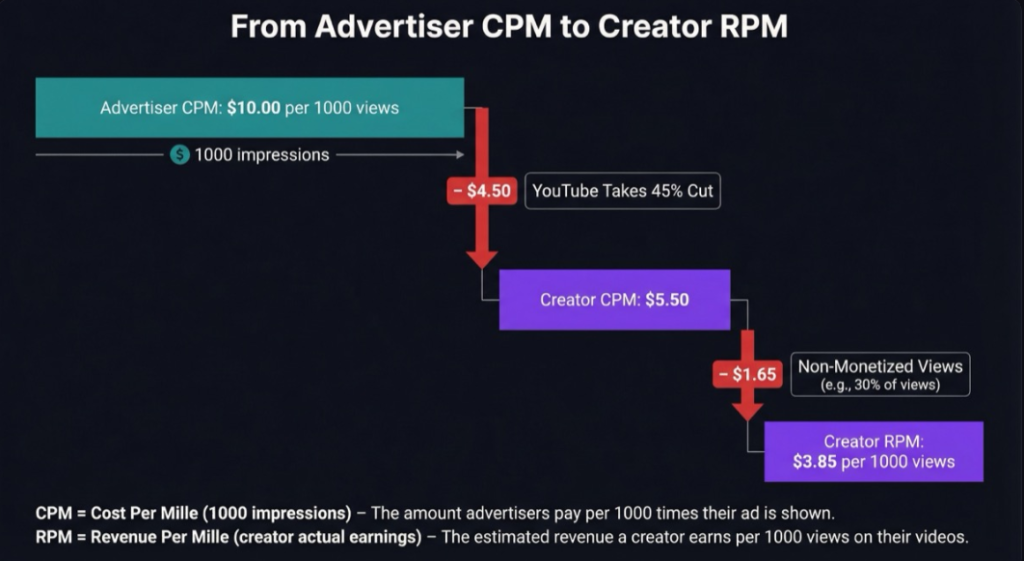
First, YouTube shares advertising revenue with creators. For long-form videos, creators receive 55% of the ad revenue, while YouTube keeps the remaining 45%. So even before any other calculations are made, the creator is already earning less than the amount advertisers paid.
Second, not every video view shows an advertisement. Some viewers use ad blockers. Others watch through YouTube Premium, where ads don’t appear. In some countries, there may not be enough advertisers to fill every ad slot. Some videos may also receive fewer ads because they don’t qualify for full monetisation.
The influence of unmonetised views
CPM only counts the views where ads were actually shown. RPM, however, divides the creator’s total earnings by every single view, including the ones where no advertisement appeared. That is why RPM almost always ends up being much lower.
Many new creators spend too much time trying to increase their CPM. The reality is that creators have very little control over it.
Advertiser demand changes throughout the year, industries have different budgets, and economic conditions also affect advertising rates. For example, CPMs often increase during the holiday shopping season because brands spend more on advertising.
RPM, however, is something creators can influence.
Why RPM is becoming the more important metric
The easiest way to improve RPM is by earning money from more than just advertisements. Many successful creators build multiple income streams through Channel Memberships, Super Thanks, affiliate marketing, sponsorships, merchandise, digital products, or online courses.
Every additional source of income increases total revenue without needing more views, which naturally pushes RPM higher.
A loyal audience that joins memberships, buys products, or supports the creator directly is often more valuable than a much larger audience that only watches ads.
That is why experienced creators often pay closer attention to RPM than CPM. CPM helps explain the advertising market, but RPM shows whether a creator’s business is actually becoming stronger.
Why is the CPM high but RPM low?
This is one of the most common questions creators ask. CPM shows how much advertisers are paying to display ads on the videos, while RPM shows how much its actually earns per 1,000 views.
RPM is usually lower because YouTube shares ad revenue with creators, and not every view is monetized. Some viewers use ad blockers, watch through YouTube Premium, or live in regions where fewer ads are shown. Since RPM includes all views, including those without ads, it is almost always lower than CPM.
FAQs
How do I increase my RPM on YouTube?
The best way to increase RPM is to earn money from more than just ads. A creator can enable features like Channel Memberships, Super Chats, and Super Thanks if the channel is eligible. Creators can also earn through affiliate marketing, sponsorships, merchandise, or digital products.
Can a 2-minute YouTube video be monetised?
Yes. A 2-minute video can be monetised if the channel is in the YouTube Partner Program and the video follows monetization policies.
How can I quickly get 1,000 subscribers on YouTube?
There is no guaranteed shortcut to reaching 1,000 subscribers. Consistent posting, responding to comments, and cross-platform promotion can accelerate audience growth.
Can I monetise with 500 subscribers and 3,000 watch hours?
Yes, but with limited features. Under YouTube’s expanded Partner Program, creators can apply with 500 subscribers and either 3,000 public watch hours in the past 12 months or 3 million Shorts views in the last 90 days.