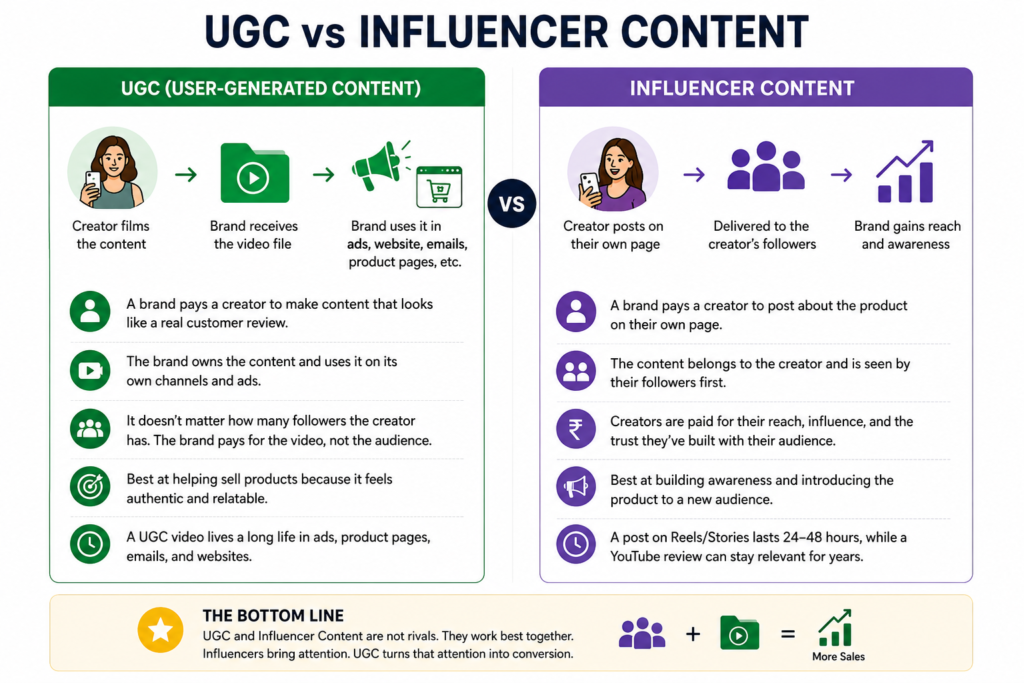
A brand pays a real person to film a quick video about a product, the brand then uses that video for their own ads. That’s called User-Generated Content (UGC). It’s different from influencer marketing, where a brand pays someone to post a video to their own followers. Brands treat these as two separate things because they use them for different reasons.
What UGC actually is?
For example, a brand sending a face wash to a creator with a short brief, “Film yourself using it, talk about the texture, keep it casual.” The creator sends back a 30-second clip.
The brand never posts it on the creator’s page, instead, it drops the clip into its own Instagram ads, its product page, and its email campaigns. That clip is UGC, short for user-generated content. It is content made to look like an organic customer post, built specifically for the brand to run on its own channels.
It doesn’t matter how many followers the creator has. The brand is paying for a video file, not for access to the creator’s audience.
How influencer content works differently
Influencer content is different, a brand pays a creator to post on the creator’s own page, to their own followers. The brand isn’t buying a video file; it is renting access to trust the creator has already built with their audience over months or years.
The line blurs because one creator can do both jobs. She might film a product demo for a brand’s ad account on Monday, then post a sponsored Reel to her own followers on Wednesday. What separates the two isn’t the creator. It’s the contract: who owns the content, and whose audience sees it first.
Why brands pay for both, separately
Brands separate the two budgets because they are buying different things. UGC creators are paid based on the quality of the video they make. Influencers are paid based on how many followers they have and how many people they can reach.
UGC is better at helping sell products because it feels like a real recommendation. Influencers are better at introducing a product to a brand new group of people.


A few comparisons that make this click
A UGC video with 200 views hasn’t failed. It becomes the raw material for an ad that a brand might later push to two million people through paid media. An influencer post with 200 views has failed, because reaching people already was its entire job.
Hiring a UGC creator is like paying a photographer for a shoot. The brand owns the pictures forever and can print them anywhere. Paying an influencer is closer to sponsoring a slot on someone else’s radio show. The brand’s message plays, but the show, and the listeners, still belong to the host.
Instagram Reels and YouTube reviews live different lives too. A Reel usually loses momentum within 48 hours. A YouTube review can keep pulling in search traffic years after it was filmed. Brands weigh format lifespan, not just format popularity, when deciding where a rupee goes.
What this means for creators
This split has quietly opened a second career path. A creator with almost no followers can still earn from UGC, because brands are hiring for filming skill, not reach.
India’s creator base already runs to 3.5 to 4.5 million people, and a growing share of them earn primarily from UGC work rather than sponsored posts. For a newer creator, that’s often an easier door to walk through than chasing follower counts first.
FAQs
Is UGC the same as influencer marketing?
No. UGC is content a brand owns and distributes itself. Influencer marketing is content posted on the creator’s own page, to their own followers.
Do UGC creators need a large following?
No. Brands hire UGC creators for their ability to film relatable content, not for their audience size.
Which works better, UGC or influencer content?
Neither wins outright. UGC tends to convert better in ads and on product pages. Influencer content tends to win at building awareness with a new audience.
Can one creator do both UGC and influencer work?
Yes, and many already do. The type of work depends on the contract, not the creator’s job title.
Why do UGC creators charge less than influencers?
Because brands are paying for content creation alone, not for audience reach, which is the more expensive part of an influencer deal.