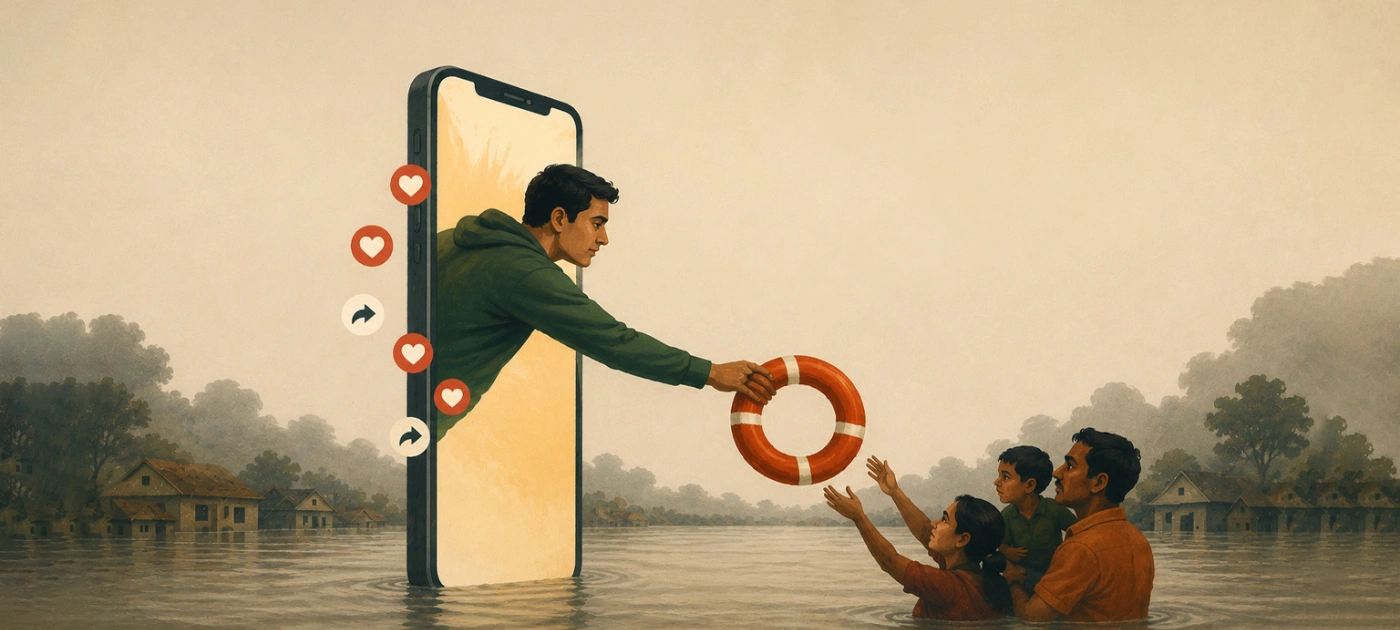
When the Assam floods hit this year, government agencies and NGOs did what they normally do during a disaster. Then a third kind of response showed up, and it moved faster than either. It did not come from an office or a relief camp. It came from YouTube channels and Instagram pages, where creators turned on a camera and asked their audience to help.
None of these creators is wealthy enough to fund flood relief on their own. What they built instead was a creator fundraising network: an audience that can be switched on within hours and trusts the person asking them for money enough to actually send it. In under a week, three creators alone pulled in more than Rs 1 crore for Assam flood relief. None of them run an NGO. None of them held a telethon. They streamed.
India’s creator base grew from about 9.6 lakh in 2020 to more than 41 lakh in 2025, per the Understanding the Canvas of India’s Creator Economy report by ISB-Hashfame. That growth explains reach, not why people pay up. The real driver is a relationship built over years: viewers who have followed a creator long enough to know their humour, their family and their ordinary days feel like they know the person on screen. When that person asks for help during an emergency, it does not read like a message from a distant institution.
Rs 70 lakh from one 50-hour livestream
Nischay Malhan, known online as Triggered Insaan, ran a 50-hour livestream for Assam flood relief on his channel, Live Insaan, starting July 31. The broadcast drew more than 15.9 million views and crossed 1.15 lakh concurrent viewers near its end, according to news sources.
By the time it ended, the stream had raised Rs 70 lakh. Viewers contributed a little over Rs 54 lakh of that. Malhan added Rs 10 lakh of his own, his brother and fellow creator Abhishek Malhan, known as Fukra Insaan, added Rs 5 lakh, and creators Prerna Malhan and Ruchika Rathore contributed Rs 1 lakh and Rs 50,000.
Most creator charity streams in India have raised somewhere between Rs 10 lakh and Rs 20 lakh. This one blew past that range over a single weekend, without a television studio, a telethon or a single celebrity guest. It was one person, a camera and an audience that stayed with him for 50 hours straight.
Two more creators, two more networks
Aaryan Kelvin, whose real name is Aman Pandit, ran a 24-hour campaign for the same cause. About 85,000 people contributed a combined Rs 16.5 lakh, and Kelvin added Rs 2.5 lakh of his own, taking the total to Rs 19 lakh. He tied the fundraiser to a specific outcome, working with the Ayan Foundation to rebuild homes for families who lost theirs, and said the amount raised could cover around 40 houses against a target of 100.
CarryMinati, whose real name is Ajey Nagar, ran an eight-hour livestream on his gaming channel, CarryisLive, playing games while keeping viewers focused on the cause. The stream raised Rs 13.04 lakh, and Nagar added Rs 2 lakh personally. Donations came in through a UPI link and on-screen Super Chats, and viewers were also directed to BharatKosh, the government portal, to route contributions to the National Disaster Response Fund.



Add up all three campaigns and creators pulled in a little over Rs 1 crore for Assam flood relief in about a week. Of that, creators personally contributed close to Rs 21 lakh. The rest, more than Rs 80 lakh, came from audiences: tens of thousands of individual, mostly small donations. That split is the real story here. This was not a handful of wealthy people writing large cheques. It was a creator fundraising network turning a very large number of small contributions into a very large total, in days rather than weeks.
Individual donors with deep pockets, including several film actors, have also written six and seven figure cheques to Assam’s official relief fund this monsoon. Those gestures matter, but they do not scale the way a livestream audience does. One person can write one cheque, whereas a creator can turn on a camera and mobilise thousands of people who each send a few hundred rupees at a time.
Trust built over years is what makes people pay
Followers do not send money because of a big number attached to a creator’s name. They send it because they feel they know the person asking. Creators talk to their audiences several times a week, reply to comments and share parts of their lives that a traditional celebrity usually keeps private. That familiarity builds a kind of trust an institutional appeal struggles to match.
Comedian Samay Raina saw this happen in real time on his show India’s Got Latent where a brief mention of the animal welfare group YODA on air helped push in more than Rs 5 lakh in direct public contributions.
The crowdfunding platform ImpactGuru has noted that donors typically decide within moments whether a cause feels genuine, even as scepticism around digital giving keeps rising. A creator who has spent years building familiarity with an audience gives donors a shortcut past that hesitation. They can see the person asking, watch the total climb in real time and see the creator add their own money to the pot.
Trust is also what fraudsters exploit
The same trust that makes creator-led fundraising work also makes donors easier to deceive. Fake appeals tend to spike whenever a disaster draws heavy media coverage. Some reuse real photographs from unrelated events. Others rely on fabricated documents or copied captions attached to a personal UPI ID, which can move money in seconds and is very hard to trace once it is gone. Cybersecurity researchers who track online fraud say fake donation appeals reliably increase around any disaster that gets sustained news coverage.
At a minimum, a creator-led fundraiser should disclose:
- the recipient organisation or relief fund
- the payment channel used to collect donations
- the amount collected at the end of the campaign
- the creator’s own contribution, if it is included in the announced total
- a follow-up confirming the money reached its intended recipient
A verified NGO, a government portal or an established crowdfunding platform gives donors more protection than an unfamiliar personal account. Creators can bring a crowd together fast. Verifying the need on the ground and delivering aid is still work for organisations built to do exactly that, and the two roles are not interchangeable.
Creators have done this before, just never quite at this scale
This was not Malhan’s first fundraiser. He has said he raised close to Rs 10 lakh for Bihar flood relief in the past and around Rs 12 lakh during the pandemic. The Rs 70 lakh Assam campaign is by far the largest amount he, or arguably any single Indian creator, has raised through one livestream.
Groups of creators have pulled off something similar before. During the second wave of Covid-19 in 2021, the influencer marketing company OpraahFx and its gaming arm OP Gaming brought more than 35 creators together for a livestream hosted by Slayy Point and Mythpat. It ran for about seven and a half hours and raised more than Rs 50 lakh for oxygen supplies, with CarryMinati, Techno Gamerz, Kusha Kapila, Technical Guruji, Total Gaming, Ashish Chanchlani, Tanmay Bhat, Ranveer Allahbadia and Dolly Singh among those who took part. The money went to the Hemkunt Foundation.
What is different about Assam is that no single organiser had to bring the creators together this time. Three of them ran three separate campaigns on their own initiative, in the same window of days, and stacked up more than Rs 1 crore between them without any of it being coordinated.
This is a harder test than views or brand deals
Creators are usually judged on followers, views, engagement rates and the brands willing to pay them. Disaster fundraising is a tougher test than any of that. Watching a video or liking a post costs a viewer nothing, while sending money, staying through a 50-hour broadcast or convincing someone else to donate too asks for real commitment. A decade ago, a fundraiser at this scale would have needed a television special, a list of film stars and a production budget. This year, it needed one person willing to sit in front of a camera and stay awake for two days.
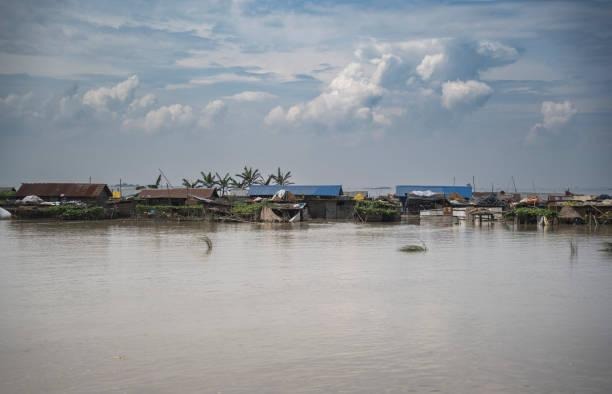
(Source: Getty Images)
Creators have not replaced NGOs, relief agencies or government funds. Three of them showed this year that a fundraising network built on trust can move money faster than any of those channels can mobilise in the same window.
Whether that holds for the next disaster depends on whether audiences keep trusting the person asking, and whether creators keep showing them exactly where the money went once the camera turned off.