
A creator with 500 to 700 followers once emailed a brand permission to “use and modify” her content. Years later, with 5 lakh followers, she found the brand had apparently used AI to alter her photograph, including her clothes, for advertising. She had never approved it. But nobody had defined “modify”, and the old email was enough.
- Why did you start Creatix Legal? What made you think creators needed specialised legal support?
- Any case you can never forget?
- Do creators overlook rights when the money on offer looks attractive?
- What is one mistake you repeatedly see creators making with brand deals?
- What should creators check before signing a brand collaboration?
- How damaging can a non-compete clause become for a creator?
- What should creators look at before signing with a talent management agency?
- When does management become control?
- What are the biggest red flags in talent-management agreements?
- When should a creator first involve a lawyer?
- Do smaller creators have any legal risk?
- When a creator has a dispute with a brand or agency, should they talk about it publicly?
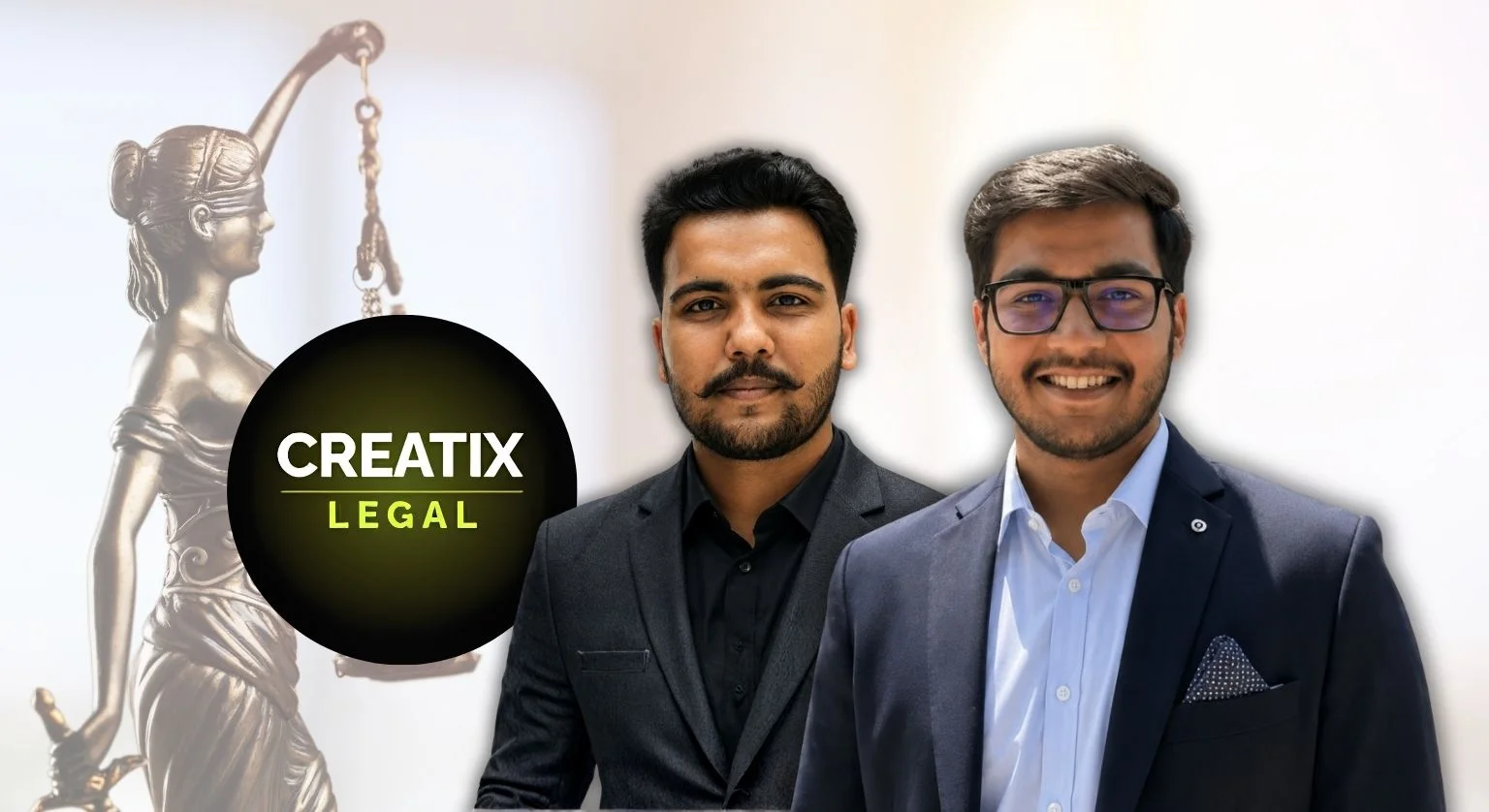
For Preetraj Singh, who co-founded Creatix Legal with Yash Garg, that is how most creator disputes begin: with one vague word. The firm, which Singh says has worked with around 100 creators on and off, helps them understand contracts, IP, management agreements and regulatory risk before a dispute reaches court or Instagram.
TCI spoke to Singh about the clauses creators overlook, why a ₹3.25 lakh offer can still carry hidden costs, when management turns into control, and why taking a commercial fight public can cost more than it wins.
Why did you start Creatix Legal? What made you think creators needed specialised legal support?
Creatix started from a conversation between me and my founding partner, Yash Garg, while we were sitting in our hostel room. We kept seeing influencers talking about problems they were facing. Whenever something went wrong, creators would usually come onto Instagram and start ranting or publicly expressing what had happened because they did not know where else to go.
Within an hour, we probably came across 10 to 20 creators discussing different problems. Some were quite serious. We initially reached out to a couple of creators ourselves. The problem was many lawyers did not necessarily understand the nuances of creator contracts, copyright, digital rights and influencer-specific commercial arrangements.
The bigger problem was that creators often didn’t know what the law was, what their rights were, or how they should conduct their everyday business in a legally compliant manner.
Any case you can never forget?
There was a creator whose old brand content was once altered using AI. She had around 500 to 700 followers when she did one of her early UGC-style brand assignments. A few years later, she had more than 500k followers, and another venture associated with her had crossed one million.
The brand still had the old photographs and videos. AI appeared to have been used to alter her photograph, including changing her attire, and the modified image was used in advertising. Naturally, she said, “I never gave them permission to do this.”

But when we investigated, there was an email from the original engagement in which she had given the brand permission to use and modify the material. There wasn’t a detailed agreement explaining exactly what “modify” meant.
These small words become extremely important.
Do creators overlook rights when the money on offer looks attractive?
Yes. We recently had a creator receive an offer for around ₹3.25 lakh for a single deliverable. The offer also mentioned 30 days of digital rights. When creators see a ₹3.25 lakh deal, naturally their attention goes towards the transaction. They don’t necessarily stop and ask, “What exactly are digital rights?”
Digital rights or advertising rights are separate commercial rights. A creator may agree to the main collaboration without realising they have also granted advertising rights without charging separately for them. The commercial amount may look great, but you still need to read between the lines.
What is one mistake you repeatedly see creators making with brand deals?
Conducting the entire business relationship through WhatsApp conversations. A lot of creator deals happen like this:
“Do you want to collaborate?”
“Yes.”
“How much?”
“X amount.”
“What do you need?”
“This many reels.”
And that’s basically the agreement.
I have had so many client matters where the arrangement was done in this kind of informal way and the creator later became stuck because something went wrong. It is much better to identify a bad clause or reject an unsuitable deal before signing it than to complete the transaction and then pull out your swords afterwards.
We don’t want creators to fight. We want to make creators legally compliant so that disputes don’t happen in the first place.
What should creators check before signing a brand collaboration?
You need to check the term of the agreement, payment terms, when rights are transferred, liability, whether the agreement has actually been signed, dispute jurisdiction, digital and advertising rights, modification rights and non-compete clauses.
Payment terms are one of the biggest areas of dispute. Sometimes an agreement says, “Payment will be made within a 60-day cycle.” But 60 days from when? From signing? From content approval? From posting? From submission of the invoice? There should be a clear deadline.
Creators should also pay attention to whether rights are being transferred before they have actually received payment. You don’t want to hand over the content and all the associated rights and then hear, “We expected better numbers,” or, “The reel didn’t perform as expected,” and suddenly the payment gets delayed.
How damaging can a non-compete clause become for a creator?
Very damaging if it is unreasonable. We worked with a fitness influencer who had a continuing engagement with a brand. She was being paid monthly and had recurring deliverables. After the engagement ended, the non-compete clause restricted her from working with competing brands for around one year.
If she cannot work with another brand in that category for one year, you have effectively restricted a significant part of her livelihood. A reasonable restriction for one or two months may be something parties can consider depending on the circumstances. But extremely long restrictions, one year, two years and so on, can become a serious problem.
What should creators look at before signing with a talent management agency?
One major question is: are you transferring your intellectual property rights?
If you’re creating the IP, you need to understand whether you remain the owner of that IP. Personality rights are also becoming increasingly important. A talent agency is providing a service to you. Creators should be careful that the paperwork doesn’t effectively make it appear as though the creator is working for the agency and surrendering ownership of everything they create.
Larger agencies usually have their own lawyers drafting these contracts. Those lawyers are doing their job, protecting their client’s interests. Creators need somebody protecting theirs as well.
When does management become control?
One major sign is when the creator isn’t even being brought to the negotiation table. If there is an important commercial discussion involving you, and your manager isn’t allowing you to participate in that conversation, that should concern you. Managers should manage you, not control you. There need to be checks and balances.
What are the biggest red flags in talent-management agreements?
One is a lock-in period. I’ve seen agreements with extremely long lock-ins, including arrangements extending for years.
Another issue is the agency’s revenue share. You need to know exactly what percentage they are taking and from which deals. You should also understand whether you have audit rights and enough transparency to verify the money being received on your behalf.
There can’t be one universal percentage because it depends on the creator and what services the agency is providing. You might see 10%, 20% or even 30% in different circumstances. But 60% is extremely high.
When should a creator first involve a lawyer?
Ideally, before you even engage a manager. A manager may become extremely important to a creator‘s career, but at the end of the day, it is a business relationship.
I’m not saying everyone needs to hire Creatix. Talk to somebody who understands the law. The important thing is that the person should be trustworthy and competent. The one legal expense I would not try to save money on is agreements. Getting your agreements drafted, vetted or reviewed is extremely important.
And creators should ask before assuming legal help will be unaffordable. There have been influencers whom I’ve helped without charging anything because we understood that they were building something.
Do smaller creators have any legal risk?
Anyone who is influencing people through a digital platform can have legal risk. A dangerous mindset among smaller creators is, “I’m small. Nobody will notice.” That’s not necessarily how it works.
Creators should also be careful about claims made in promotional content. A campaign brief might ask you to say that using a particular product for 30 days will produce a particular result. Creators sometimes repeat whatever has been given to them without understanding the consequences. Then they may receive a notice from a regulatory authority or a food-safety-related department.
When a creator has a dispute with a brand or agency, should they talk about it publicly?
My advice is: don’t make the public rant your first step. It can backfire.
We had one client involved in a fairly major dispute. We had negotiated a settlement somewhere around ₹3 lakh to ₹4 lakh. I don’t remember the exact amount, but both parties had more or less agreed. Everything was supposed to be signed on Monday. Then, on Saturday night, the creator published content criticising the other party.
The settlement collapsed. Instead of receiving the settlement amount, the creator ended up with nothing and also faced the possibility of a defamation-related legal notice.
I’m not saying you should never take a stand. I’m saying take your stand in the right way. Go to a lawyer. Show them what you signed. Explain what happened. Maybe the next step is a legal notice. Maybe it is simply a normal conversation.
Conversation can resolve things that escalation cannot. If you want to speak publicly, discuss what can safely be said. You may even decide not to name the agency initially.