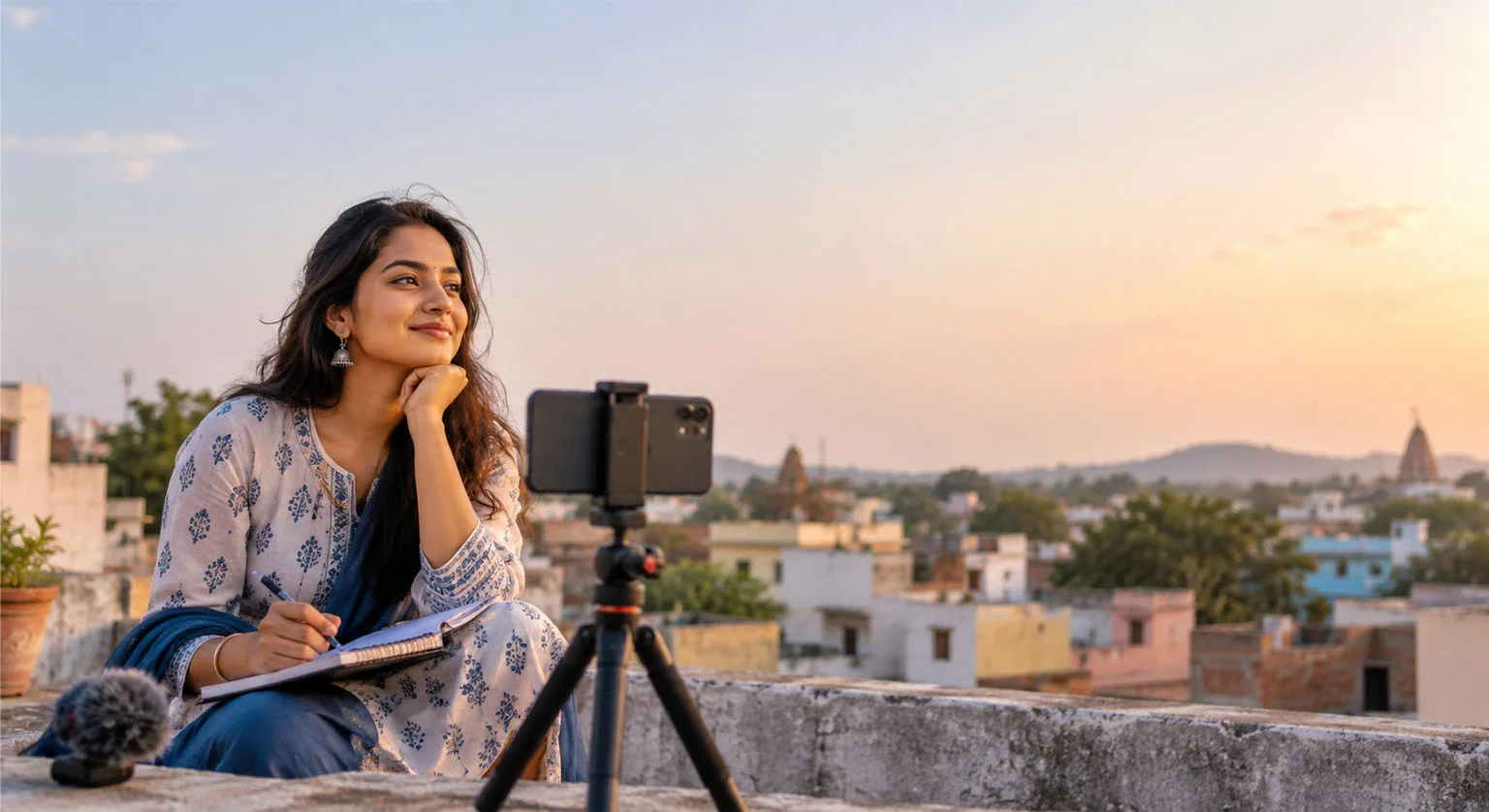

My Instagram this time of the year has only been showing me Raksha Bandhan and Onam content, while I can also see some Maharashtrian creators gearing up for Ganesh Chaturthi. Fashion, beauty and jewellery pages have also started preparing for Navratri. Tech creators know that September will bring another rush of phone launches, comparisons and buying guides.
- Diwali is the peak, not the entire festive marketing season
- Festive brand campaigns reach beyond fashion and beauty
- Regional and micro creators have a clear opening
- Festive brand deals are decided before the campaign appears
- More influencer campaigns can also mean more sameness
- Creators should start before brands finish planning
By the time Diwali arrives, brands have already been spending for weeks.
I used to think of Diwali as the beginning of the main advertising season and it is still the biggest festival on the calendar, but after watching one campaign cycle move into the next, it is difficult to treat everything before Diwali as preparation.
The campaigns are already visible. Cadbury Celebrations has said that its Raksha Bandhan media strategy is weighted towards influencers and e-commerce. IGP’s “The Rakhi Promise” includes creator-led storytelling and collaborations across fashion, beauty, food, lifestyle and entertainment. Reliance Trends brought dancer and creator Sarangi Shyam and DJ Attakkari into its Onam campaign.
Foxtale introduced Shah Rukh Khan as the face of “Let Your Glow Through” in August and followed it with more than 70 billboards across Mumbai, Bengaluru and Delhi. It is a celebrity-led brand campaign, so it should not be presented as proof that smaller creators are receiving more work. I see it as evidence of something broader: consumer brands are building visibility before the festive shopping period reaches its peak.
The festive advertising season is already under way. We simply continue to speak about it as though it begins with Diwali.
Diwali is the peak, not the entire festive marketing season
Qoruz expects Indian brands to spend around ₹900 crore on creator marketing during the 2026 festive season, up from an estimated ₹700 crore last year. Around 7,200 brands are expected to work with creators during this period.
The ₹900 crore estimate will attract attention, but the festival-wise split says more about what is happening. Diwali accounts for 49% of festive creator collaborations. Navratri, Durga Puja and Dussehra together account for 31%, while Ganesh Chaturthi contributes another 11%. The remaining comes from other festive occasions.

More than half of festive creator collaborations therefore happen outside Diwali.
Raksha Bandhan creates a market around siblings, gifting and family content. Onam opens another set of campaigns in Kerala. Ganesh Chaturthi changes the conversation in Maharashtra. Navratri brings fashion, beauty, jewellery, food, music, dance and events into focus, while Durga Puja gives Bengal its own large advertising period. Diwali arrives after brands have already moved through several distinct cultural and commercial moments.
The shopping period stretches further than the festivals themselves. A Meta-commissioned IPSOS study described India’s festive season as beginning around July or August and continuing until New Year’s Eve. Nearly one in two festive shoppers surveyed said creator content on Meta platforms helped them find deals, while more than 30% relied on creator reviews and buying guides. Meta benefits from telling advertisers that creators and Reels influence shopping, so its findings should be read with that in mind.
Festive spending comes with a lot of indecision. People compare phone prices, search for gifts, plan costly journeys home, check whether discounts are real and look for restaurants, outfits and experiences. Before buying, many of them turn to someone who has already reviewed the product, visited the place or examined the offer.
Festive brand campaigns reach beyond fashion and beauty
I still think almost every creator niche feels the festive season, although that does not mean every niche gets the same number of paid briefs.
Most of the money remains concentrated in a few large consumer categories. Consumer durables and electronics account for 20% of estimated festive creator-marketing expenditure, followed by fashion and beauty at 19%, e-commerce at 17% and FMCG at 15%. Those four categories together represent 71% of the market, with automobiles contributing another 7%.
Fashion, beauty, shopping, electronics and FMCG creators will naturally see a larger share of campaigns. A niche gaming creator and a fashion creator preparing for Navratri are not entering the same market. But the effect of the season goes beyond the budgets formally labelled “festive influencer marketing”.
Take tech creators for example. Apple announced the iPhone 17 on September 9, 2025, continuing the familiar September launch cycle that dominates technology coverage for weeks. Most creators covering the launch were never going to receive an Apple sponsorship. Their opportunities for collabs could still come from retailers, competing smartphone companies, accessories brands, trade-in platforms and affiliate programmes. Organic reviews and comparisons may also gain more attention because a large audience is suddenly considering the same purchase.
F&B creators have special restaurant menus, festive recipes, sweets, gifting and FMCG campaigns to work with. Travel creators have people trying to get home, book a short holiday or understand why prices have risen. Finance creators have credit cards, gold investments, EMIs and expensive purchases. Home creators have decor, furniture and appliances. Auto creators have new models and festive offers.
Gaming and entertainment creators may see something different. Their audience does not disappear during the festive months. People who stay home still watch, play and stream, although the opportunity may come through audience growth or a relevant gaming, device, delivery or entertainment brand rather than a traditional festive campaign.
A rise in views is not a brand deal, and an affiliate sale is not the same as a paid integration. They are separate ways in which the season can become commercially useful.
Regional and micro creators have a clear opening
The regional part of this story is way more interesting than the headline spending figure.
India does not move through one common festive season; Onam, Navratri, Ganesh Chaturthi and Durga Puja come with different food, clothes, rituals, languages and buying habits. A brand may be active across the country, but the reason someone buys from it can change from one state to another.
I believe that gives regional creators an advantage that cannot be created by translating a national script.
During Onam, Reliance Trends worked with talent connected to Kerala’s digital and cultural space. Across the wider festive market, brands are also moving away from taking one national advertisement and dubbing it into several languages. Some industry experts argue that regional creators are being considered because their value lies in their knowledge of local traditions, family habits, humour and community life.
A Malayalam lifestyle creator does not need a campaign deck to explain Onam to her. A Gujarati fashion creator may already know which styles, events and shopping conversations matter during Navratri. A Bengali food creator understands Pujo as part of everyday life rather than as a visual theme added to a branded Reel. Moreover, since it is their own festival, they will add a touch of their own culture.
For a particular campaign, that familiarity matters more than a much larger or widely scattered audience.
Qoruz says nano and micro creators accounted for 75% of festive creator participation last season, while creators from tier-two and tier-three markets contributed 38% of activations. These figures refer to participation, not earnings. They do not show that smaller creators received most of the money, but they do show that brands are running a large volume of festive work beyond celebrity and mega-creator campaigns.
Regional creators are often described as a lower-cost option. That description overlooks why they may be the better choice. If a campaign depends on representing a festival properly, local knowledge is part of what the brand is buying.
Brands sometimes weaken that advantage by asking regional creators to repeat a national script in another language. The content may be local on paper, but the thinking behind it remains generic. Involving the creator earlier gives the campaign a better chance of reflecting how people in that market actually celebrate and shop.
Festive brand deals are decided before the campaign appears
Creators usually notice the festive rush when sponsored posts start filling their feeds but the business behind those posts begin much early. Before a campaign goes live, someone has approved the budget, written the brief, searched for creators, discussed names, negotiated rates and planned the publishing schedule. By the time the audience sees the final Reel, many of the important decisions have already been made.
That creates a problem for creators who begin thinking about festive brand deals only when their feeds start looking festive. Some creators will receive enquiries because brands and agencies already know them. Many relevant creators will still be missed. Their work may be strong, but a marketer may not be able to tell quickly where the audience lives, which language it speaks or whether the creator fits the campaign.
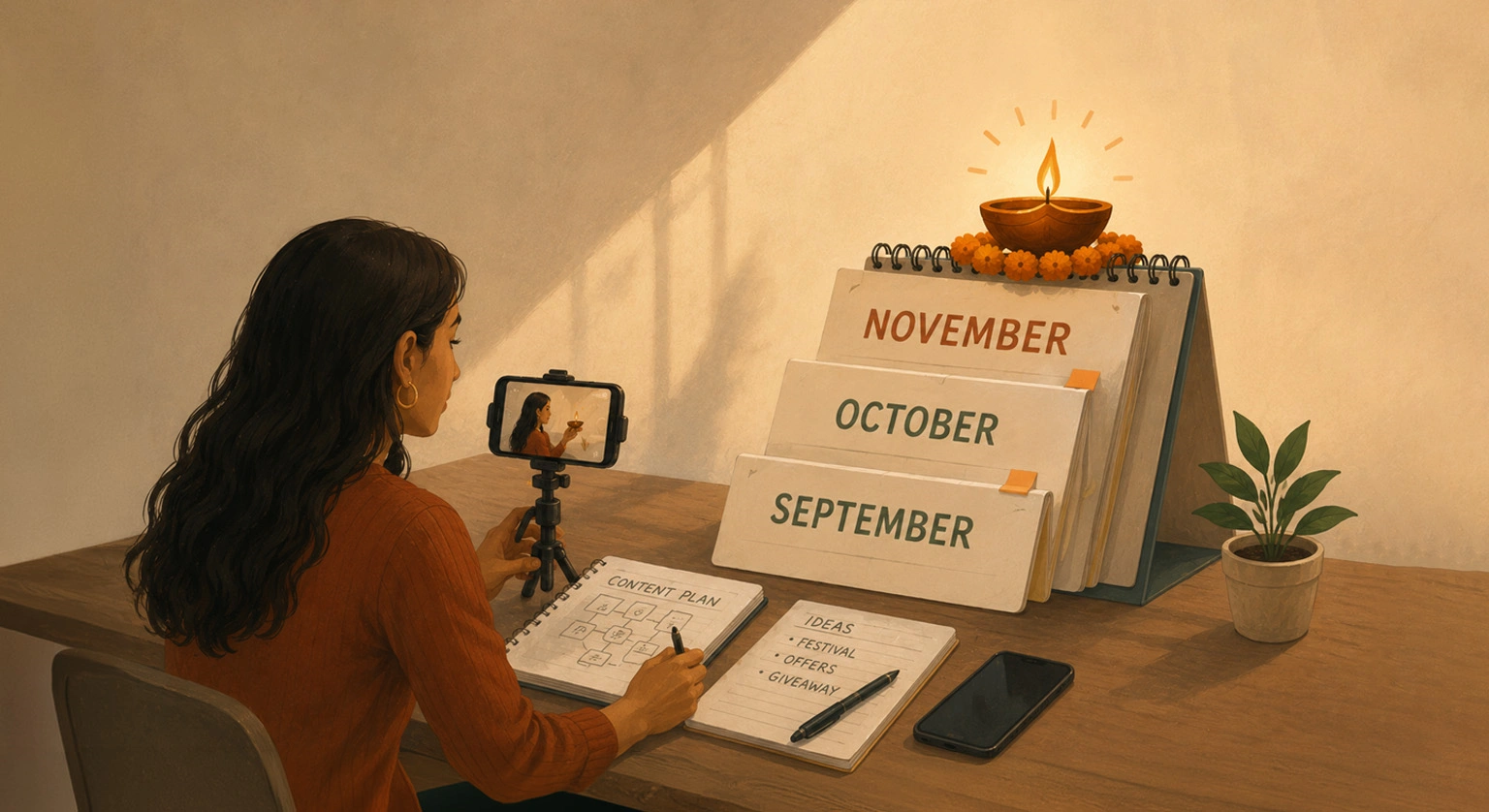
Creators spend a great deal of time making themselves understandable to their audience. They should give some thought to how they appear to the people selecting them for paid work. A brand manager looking for micro influencers in Maharashtra, Malayalam creators for Onam or food creators in Kolkata should be able to understand the fit without searching through months of posts. The creator’s bio, contact details, audience information and previous work should make that process easier.
I also think creators are too hesitant about outreach. Who does not love skipping a step or two.
A relevant email to a brand or agency is a normal business approach. The problem lies in sending a generic message that says more than “I would love to collaborate”. That leaves the recipient to work out what the creator can offer and why the timing makes sense.
A useful pitch does some of that work in advance. A Maharashtra-based food creator planning a Ganesh Chaturthi series can explain the idea, the audience and the place where the brand fits. A fashion creator can approach a jewellery or beauty company with a Navratri concept instead of simply announcing availability for collaborations.
Brands receive many requests, but a clear idea gives them something they can evaluate.
Organic content can help too. A creator who has already made good work around a festival gives a marketer a better sense of what a paid collaboration might look like. The creator is no longer asking the brand to imagine the fit from nothing. Though none of this guarantees a deal, it improves the chance of entering the conversation before the brief is closed.
More influencer campaigns can also mean more sameness
A larger festive creator market will bring more sponsored content into people’s feeds. That does not automatically produce better campaigns. The same festivals return every year, and so do many of the same advertising choices. The ethnic outfit, the decorated room, the gift exchange and the product placed carefully in the centre of the frame are all too familiar by now.
The problem is not the elements, but it occurs when dozens of creators receive the same script and are given barely any room to adapt it to their audience.
At that point, the creator becomes another place to distribute an advertisement. The brand still gets the face and the followers, but much of the judgement, language and local understanding that made the creator useful has been removed.
This is particularly visible during regional festivals. A campaign cannot claim local relevance simply because the creator speaks the language. The idea, product and way it is presented still need to make sense in that setting. This is why I think creators ask for creative freedom in the scripts and way of presentation.
A high volume of festive work can also test audience trust. Viewers will notice when several competing products are described with the same conviction within a few weeks. Luckily, brands and creators both want to avoid that outcome.
The strongest festive collaborations tend to have a straightforward reason for existing. The product belongs to the occasion, the creator understands the audience and the idea suits the way that creator normally communicates.
Creators should start before brands finish planning
I think creators need to treat the festive season a little more seriously as a business opportunity. If your audience, language, city or niche makes sense for a festival or a category, make that obvious before brands start finalising their lists.
And yes, outreach matters. There is nothing wrong with approaching a brand or an agency if you have a relevant idea. A specific pitch around Navratri, Ganesh Chaturthi or festive shopping is far more useful than simply saying you are “open to collaborations”.
Creators should also start posting relevant organic content early. It gives brands a sense of how you think, what your audience responds to and whether you actually understand the occasion.
By the time festive campaigns start appearing everywhere, a lot of the planning may already be done. The creators who move early will simply have a better chance of being part of that conversation.